Pennsylvania · Dog Friendly
New Freedom
A rail trail, a steam railroad, and a town under five thousand where two of the three breweries keep water out for dogs without anyone having to ask
🐾 Dog Verified
🐾🐾🐾🐾🐾 Five Paws
📍 New Freedom, PA
A rail trail, a steam railroad, and a town under five thousand where two of the three breweries keep water out for dogs without anyone having to ask
New Freedom is a borough of fewer than five thousand people in southern York County, about twenty minutes from our door. Every other guide on this site is somewhere we traveled to. This one is somewhere we are three or four times a week.
That changes what we can tell you. We know which lot to park in. We know that two of the three breweries keep a water cooler outside all season, stocked, without anyone having to ask. We know the stretch where the rock walls come in close, and the crossings where the tracks are still live. We know Kelly will have a crowd around her by the time I come out of the coffee shop.
What makes the town work is density. Come off the trail at the old station and you are within a block or two of coffee, ice cream, and two breweries. Park once and walk to all of it. That is not normal for a town this size, and it is not an accident … New Freedom sits at the highest point on the entire Heritage Rail Trail, and the borough exists because the line came through. Conrad Free's family settled the ground in 1783. The name Freedom was already taken by a town in Beaver County, so when the borough incorporated in 1873 it went in as New Freedom.
The trail is how we found it, and the reason we kept coming back. If you want the longer version of how a daily walk turned into all of this, it is on our NCR Trail page.
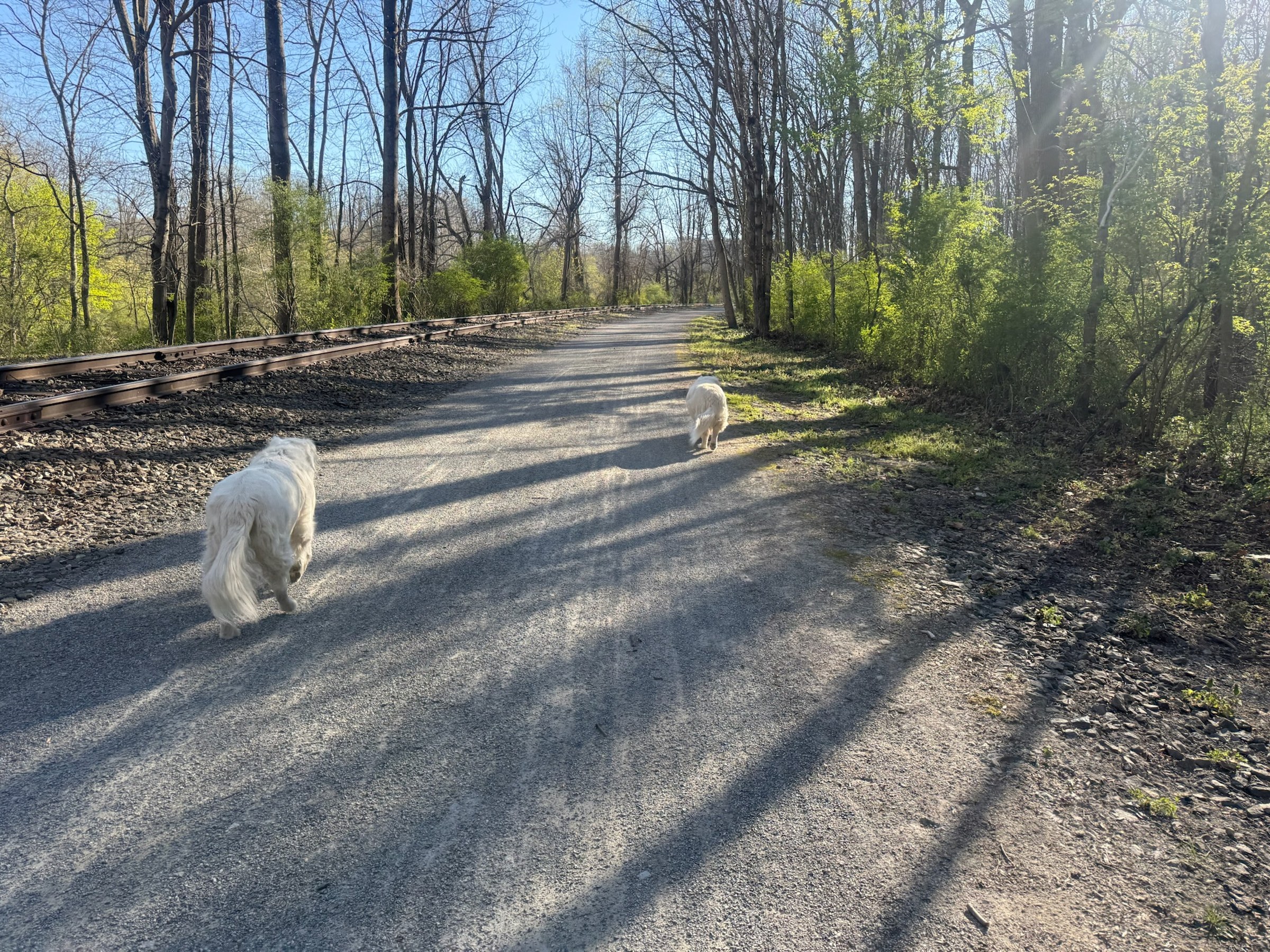
Come somewhere often enough with two white dogs and the town starts to know the dogs. Faces change in passing cars. Somebody shouted that they were adorable out a window on Front Street once and kept right on going. Cyclists who have passed us forty times are already smiling before they are close enough to say anything.
A woman named Vicky came across a parking lot mid-sentence to ask if she could pet them, then stopped and said she knew us from the New Freedom station. She runs events for the railway. Another afternoon a cyclist told us his wife watches the trail from their front porch and talks about the couple with the two white dogs. He seemed a little puzzled by us, because he had been seeing us up and down the whole corridor and not just past his house. We passed him again weeks later, on a bench miles further north, and he laughed and said those dogs have got some miles on them.
None of that happens without the dogs. Two people walking a rail trail are two people walking a rail trail, and strangers walk right on by. The dogs are the reason anybody stops. They give people a reason to smile from across a parking lot and, more often than we expected, a reason to tell us about their own dog, or the one they lost.
Sawyer walked most of this with us. He is the one who taught Theo how to be greeted by a stranger, how to hold still for a child's hand. We lost him in May 2026, at nine and a half. Theo does that job now, and he is teaching Beau.
So some of what is in this guide happened with Sawyer and Theo, and some of it is happening now with Theo and Beau. We did not edit him out.
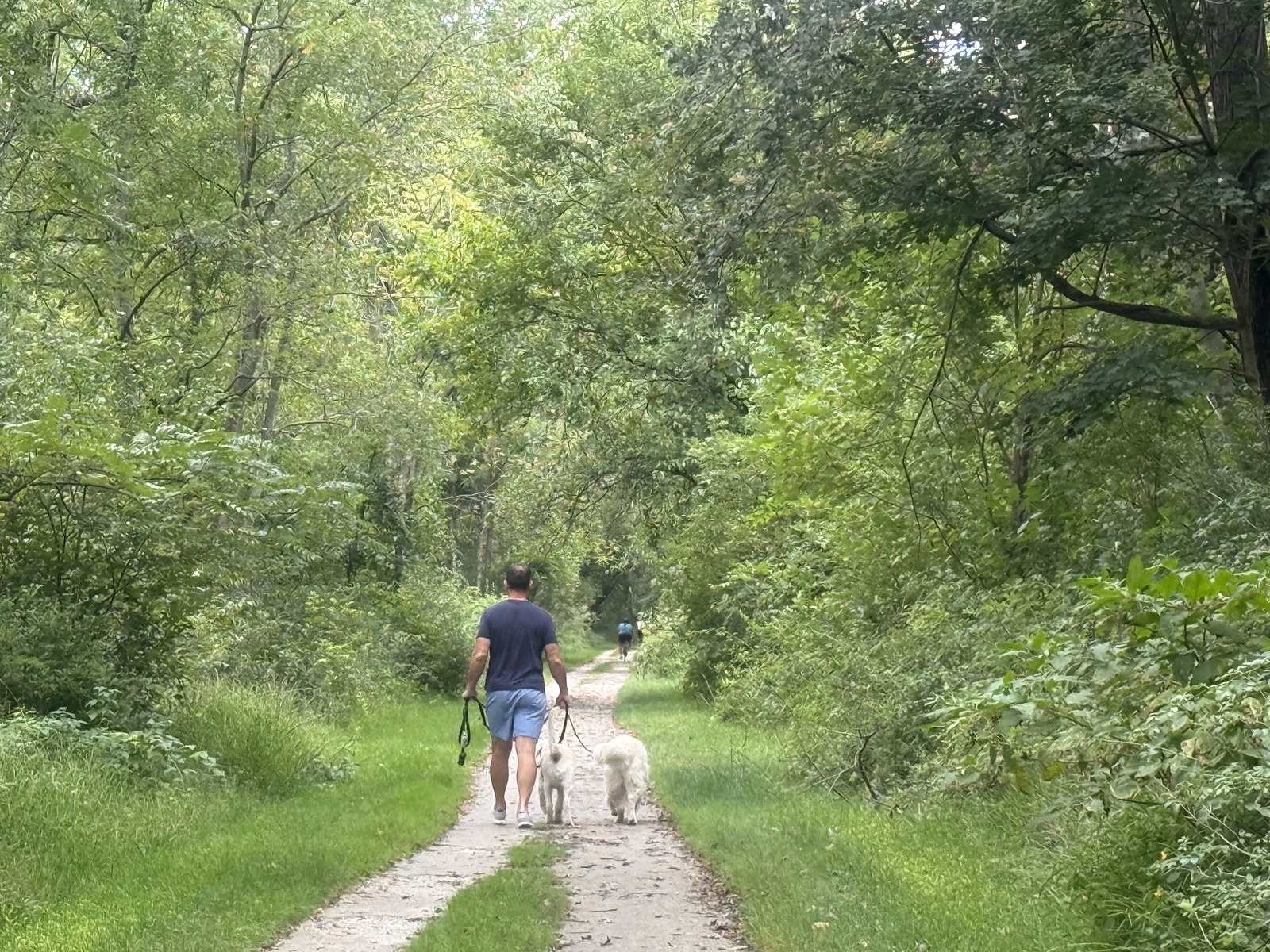
The Heritage Rail Trail runs 41 miles from Cockeysville, Maryland to York, Pennsylvania. We've walked nearly all of it. These are the stretches we keep going back to
A word on distance before the list. Every trail guide you will find quotes end-to-end mileage, which is close to useless if you are walking dogs. We almost never walk a full section. We park, head out, and turn around when it is time to turn around. Two to three miles total is a normal day for us.
What decides that is not ambition. It is daylight in winter, heat in July, and whoever is setting the pace. Sawyer told us when he had had enough toward the end. Beau is four months old, and two miles is plenty. The trail does not care which direction you came from, and neither do the dogs.
Every access point below has dedicated parking. Start anywhere.
The one we walk most. It is the closest to us, and if we keep going it runs straight up into New Freedom, which means food at the end if we feel like it.
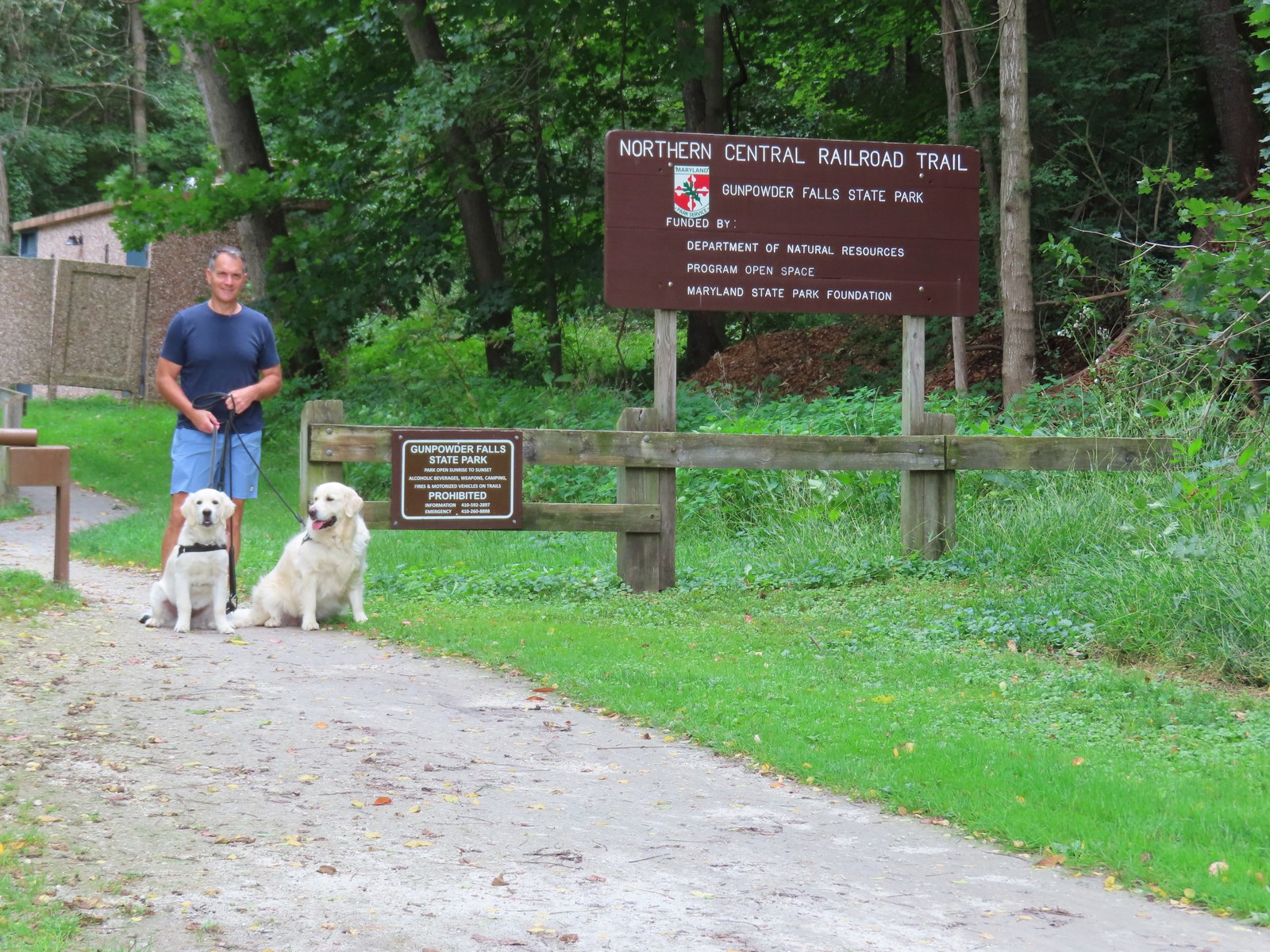
You cross the Mason-Dixon line partway up. There is no ceremony to it, just a marker and then you are in Pennsylvania. Freeland is the last access point on the Maryland side.
It earned its nickname a few years back. A domestic turkey wandered off a farm bordering the trail and decided that stretch belonged to him. He was not alone … a flock of chickens had gotten out with him, and he had apparently appointed himself their protection. He came at us. We left. We are fairly sure he was showing off at our expense.
He is not there anymore. The name stuck.
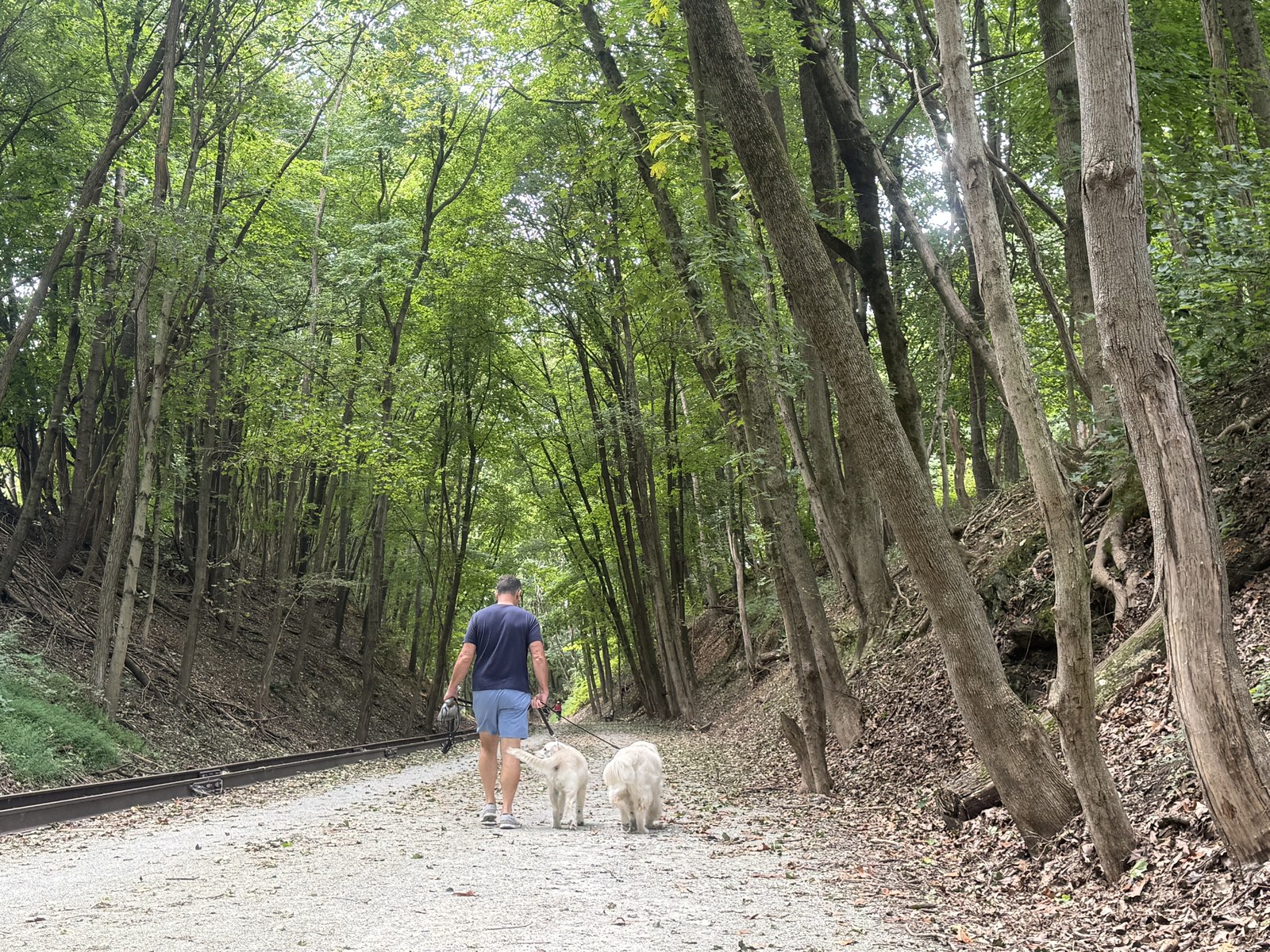
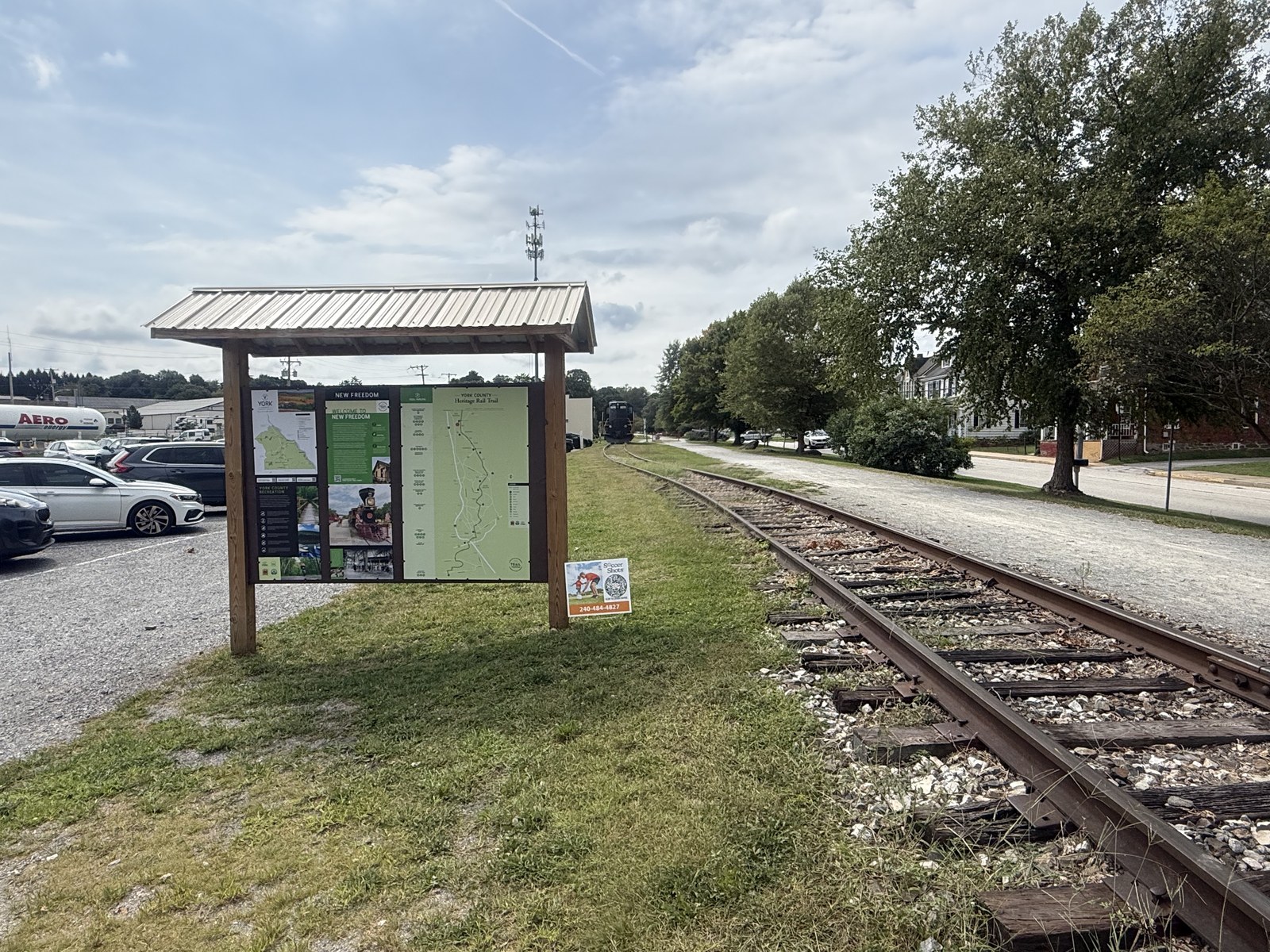
Our other regular, and the one we would send anyone to first.
New Freedom sits at the top of the grade. Coming up from York it is about a 6% climb over the last five miles, which is why cyclists are told to start here and coast north. On foot it just means the walking is easy in both directions once you are up.
The lot is a fork. Head south and you are on what we call the Canopy Trail, a wooded stretch where the trees arch over the path like a tunnel. It is absolutely gorgeous in the fall. Head north and the trail carries you past the railroad museum and up to the station, and from there the whole town is a block or two away.
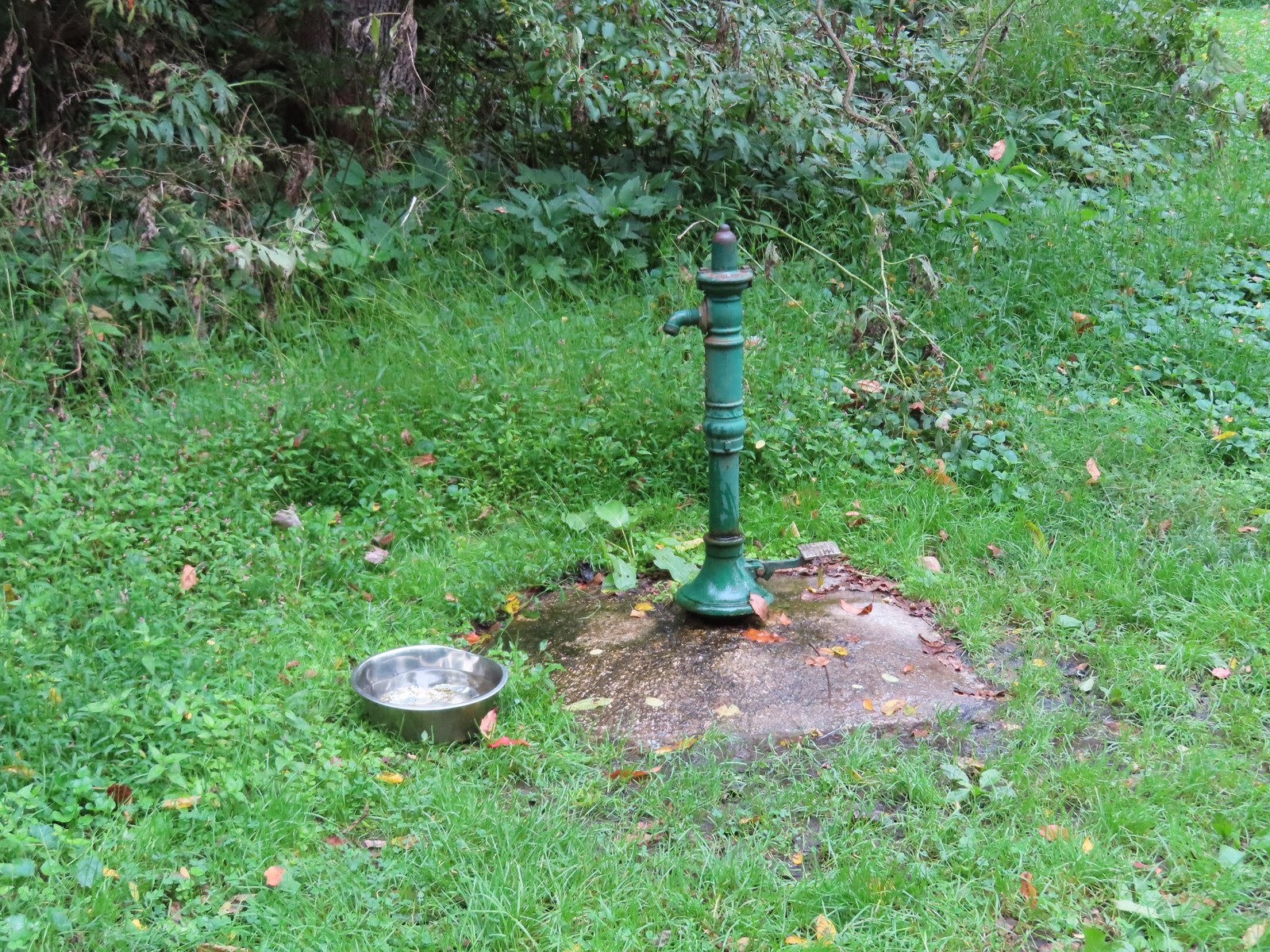
The lot backs onto the community park, tennis courts and a playground, and there is a dog water fountain tucked behind the station.
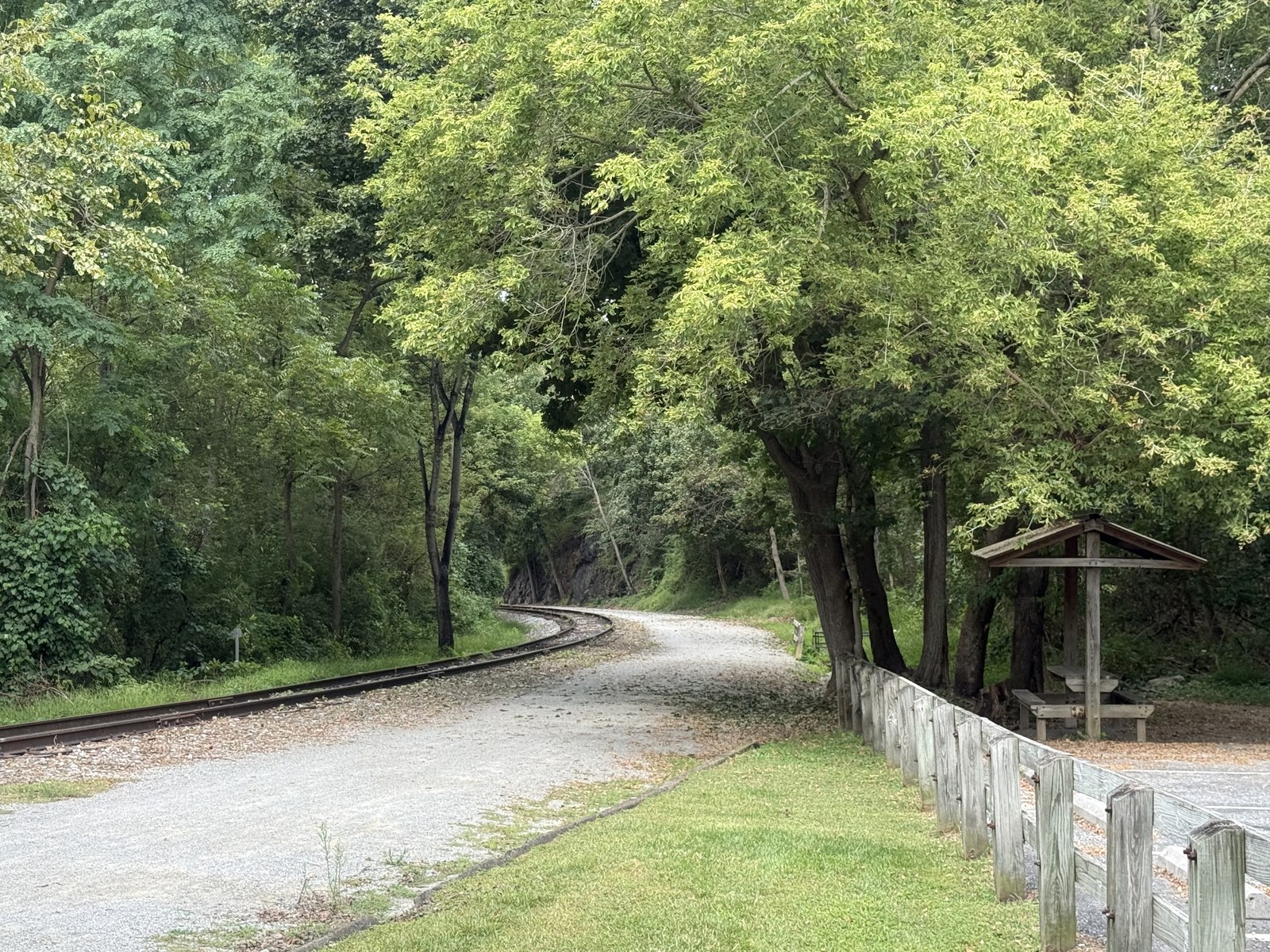
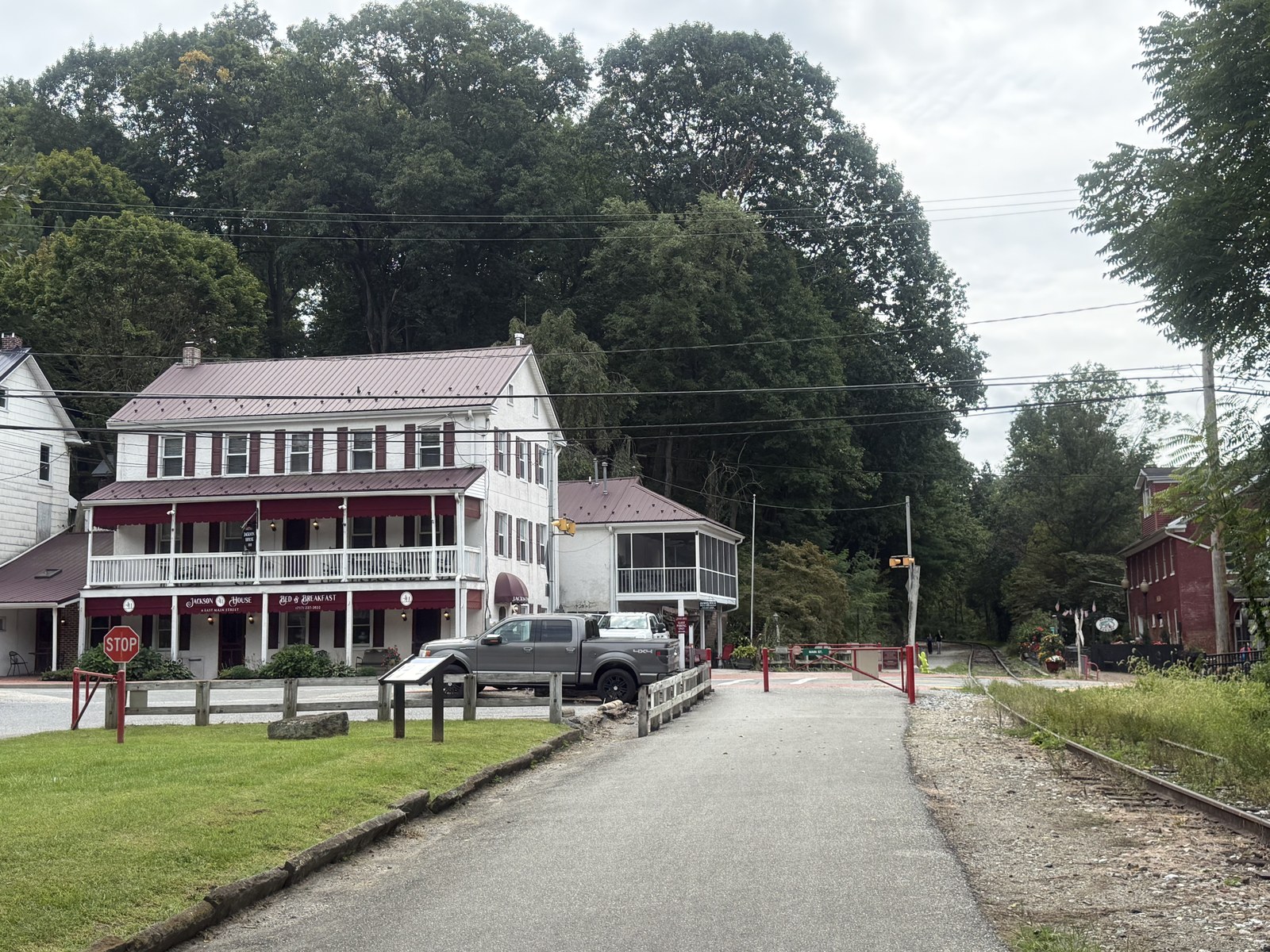
Small lot right off the trail, with The Creek House directly across and the Jackson House Bed & Breakfast across the street from that.
Head south from here and AleCraft Brewing is about three tenths of a mile down the trail. You cross the tracks to get there.
Railroad has the strangest origin story on the corridor. Frederick Helb ran a leather tannery and rendering plant across from the station. After Gettysburg, where more than five thousand horses and mules were killed, he collected the carcasses. At its height the operation was turning out seven thousand hides a year, and locals took to calling the place Horse Heaven. The borough incorporated as Railroad.
There is a crabhouse, Captain Bob's, right beside the lot. We have never eaten there, so we are not going to tell you it is good … we are telling you it is there.
Blink and you will drive past it. The lot is small and rudimentary, four or five cars, and it is almost never busy.
Head north from here toward Glen Rock and it is one of the prettiest runs on the whole trail. Exposed rock walls, heavy tree cover, and late-day light coming down the cut at an angle that makes everything look staged. Some days we walk the full section. Some days we turn around halfway and call it enough.
Kelly was filming it one afternoon. Dogs out ahead, light doing exactly what she wanted, and she was getting more excited about the shot by the second. She did not notice Sawyer step off the trail to do his business directly in frame.
Perfect shot. One blooper. We are still laughing about it.
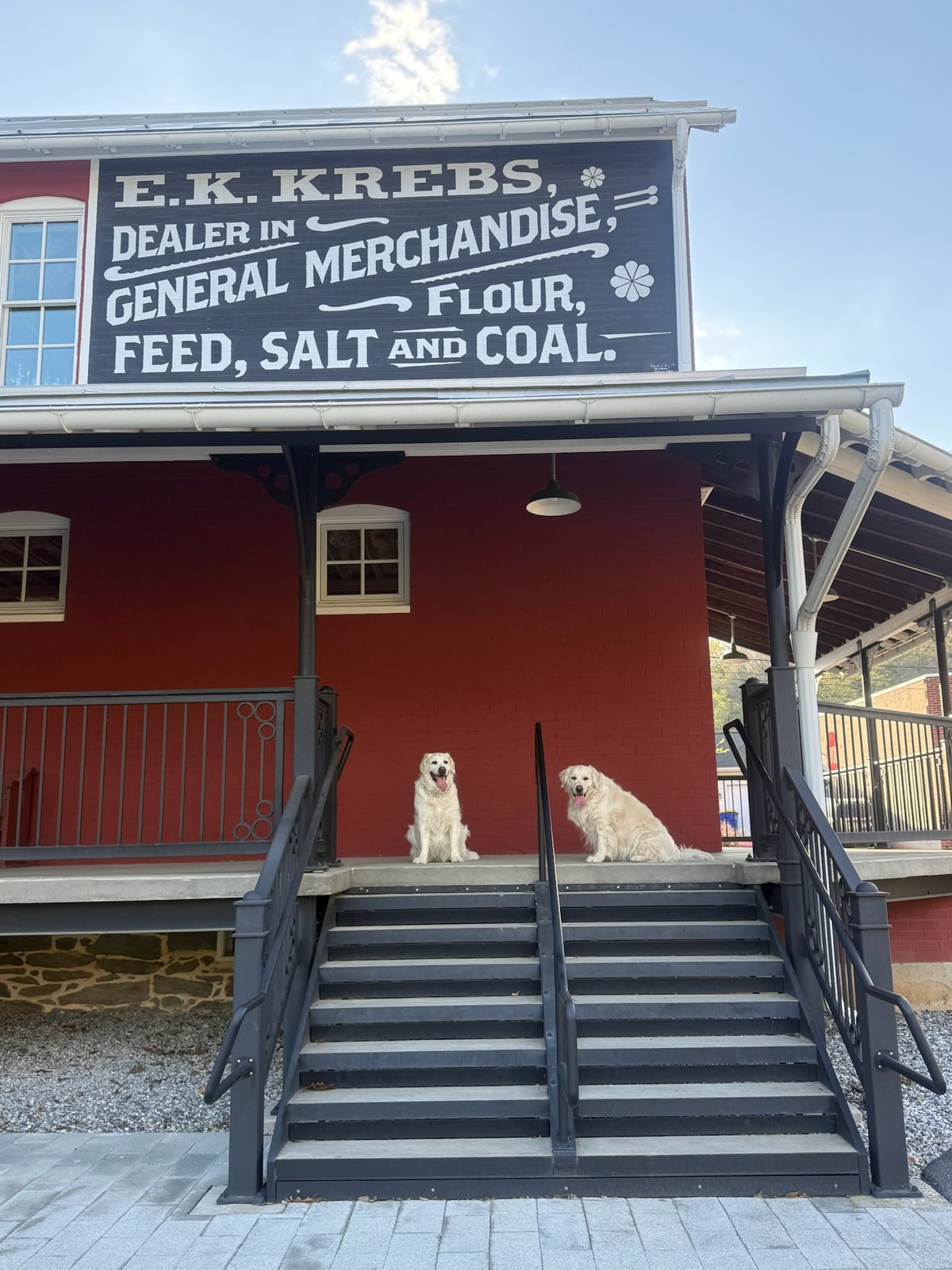
Small borough sitting right on the trail. Our turnaround here is the E.K. Krebs building, a brick survivor from the town's manufacturing years that stands where the trail comes through.
It is also the turnaround for the railway's one-hour Glen Rock Express. If you time it right you will be walking while the steam train comes through, which is worth planning around once.
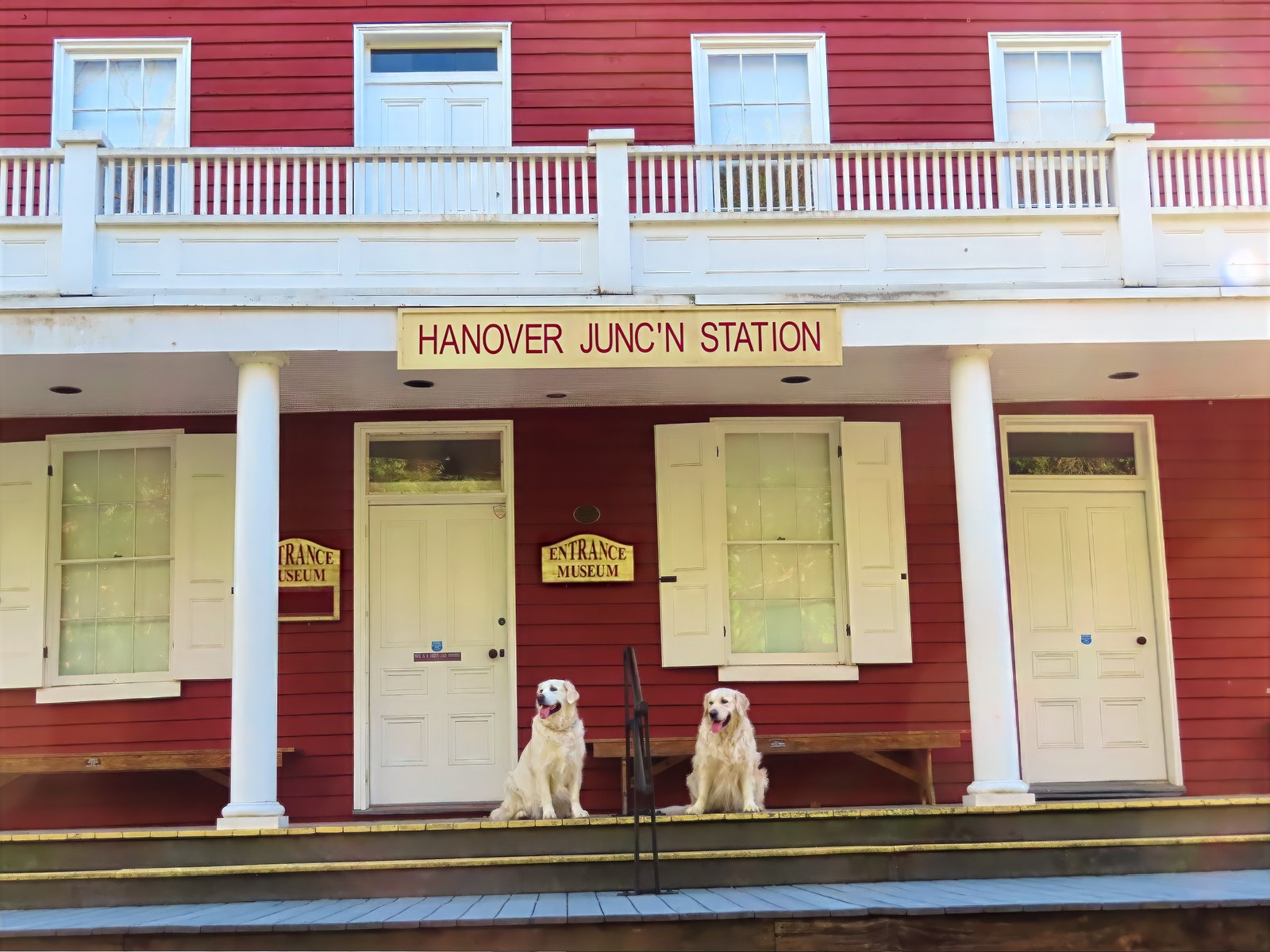
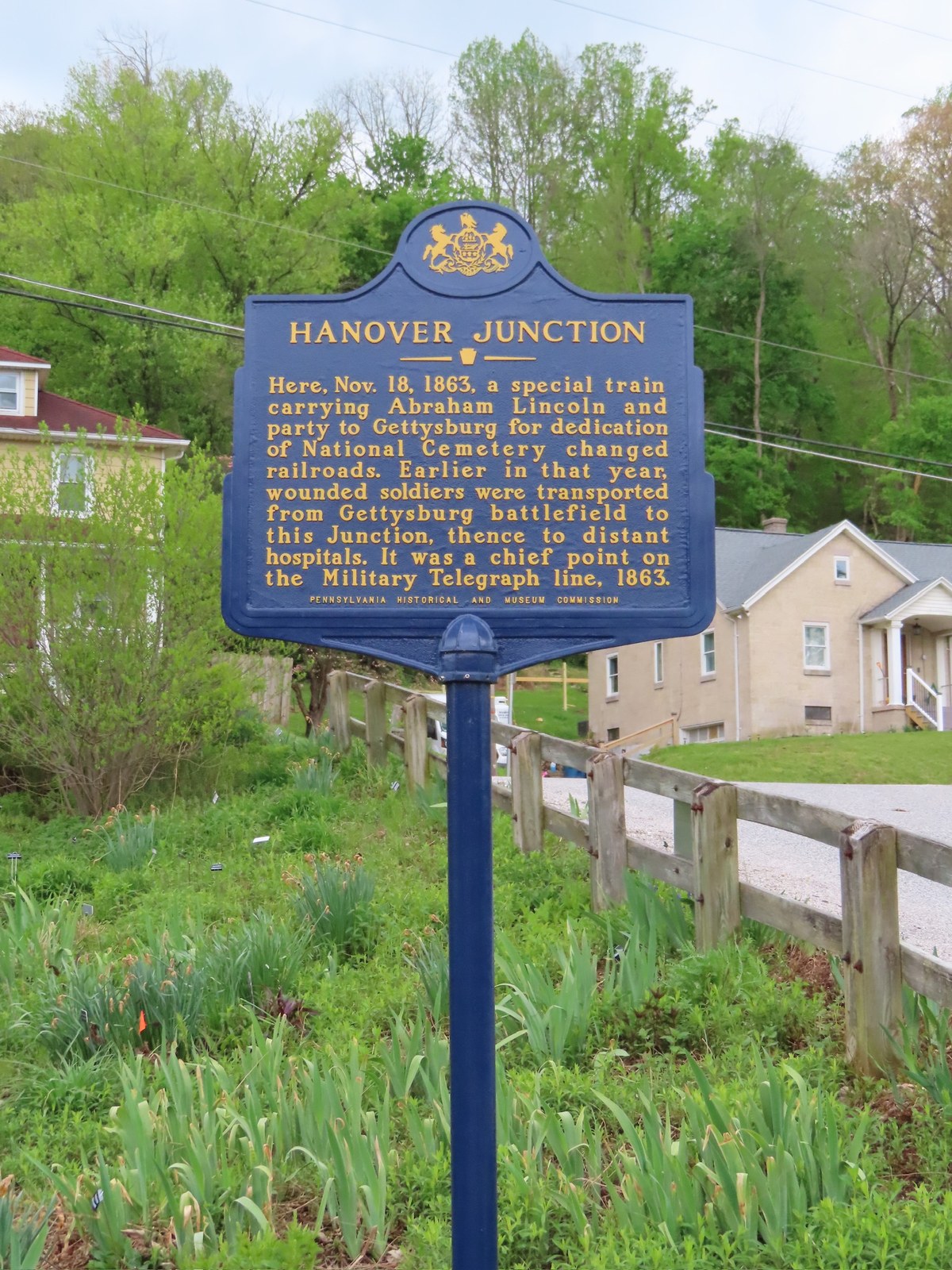
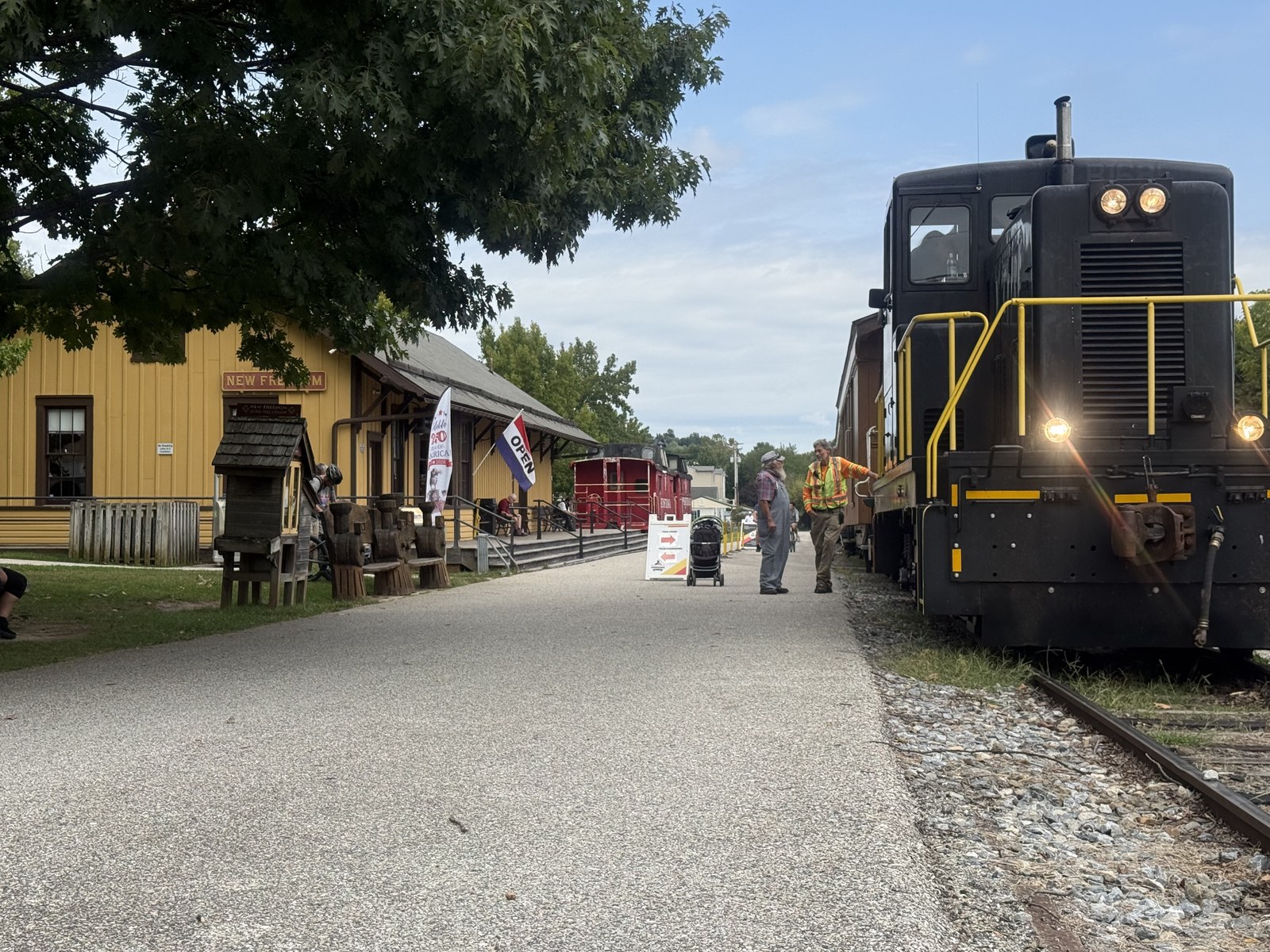
A restored nineteenth-century junction station with a museum inside, and one of the few places on this trail where the history is standing in front of you rather than sitting in a book.
Lincoln changed railroads here on November 18, 1863, on his way to Gettysburg. The state marker on site records what the junction was used for afterward as well: wounded men were carried from Gettysburg to this point and sent on from here to distant hospitals, and it served as a chief point on the Military Telegraph line in 1863.
It is a good destination walk … you are going somewhere rather than just out and back, and there is something to look at when you arrive.
Half a mile past Hanover Junction. Small, quiet, and less trafficked than the southern end. The stretch we pick when we want the trail mostly to ourselves.
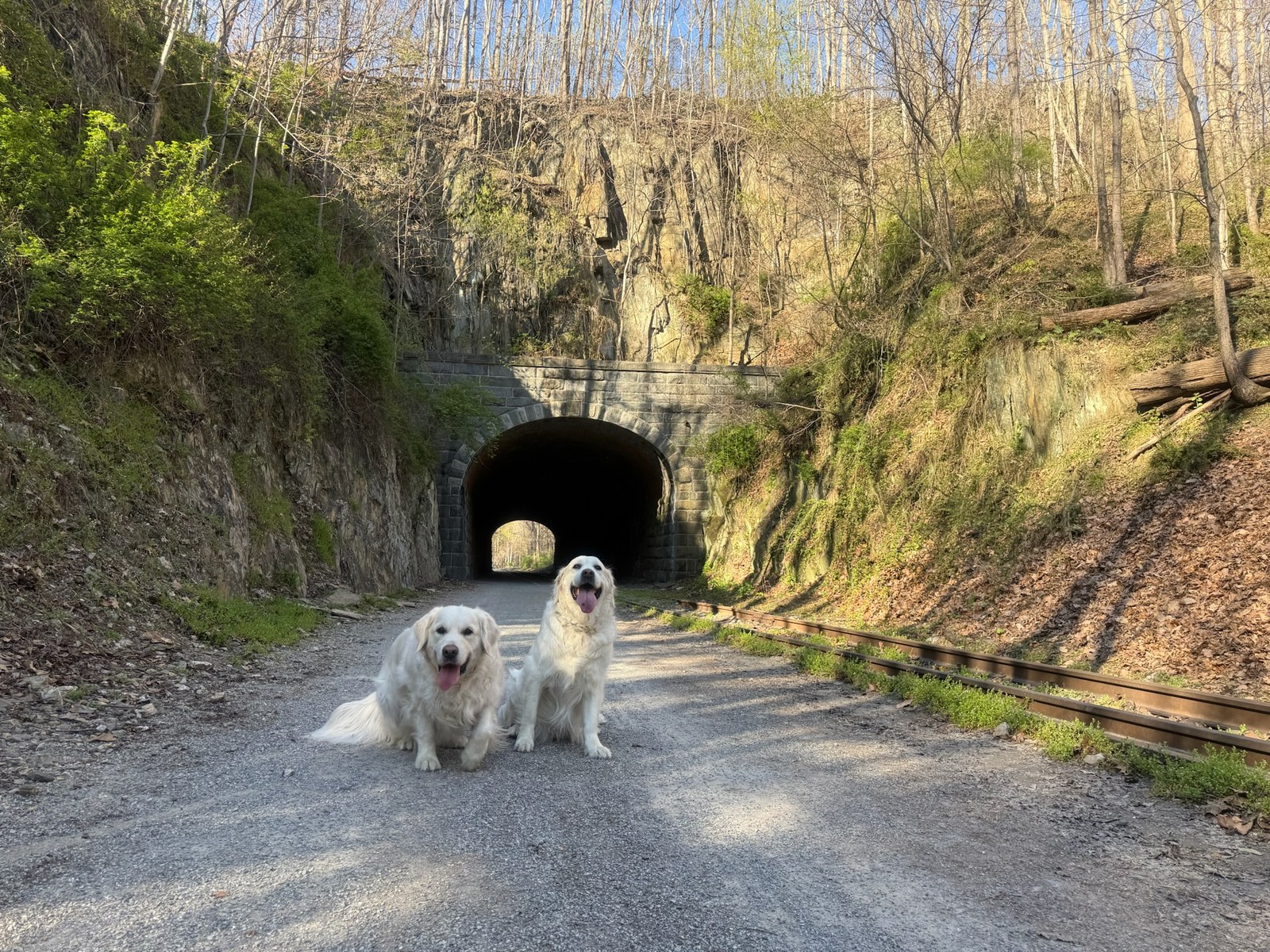
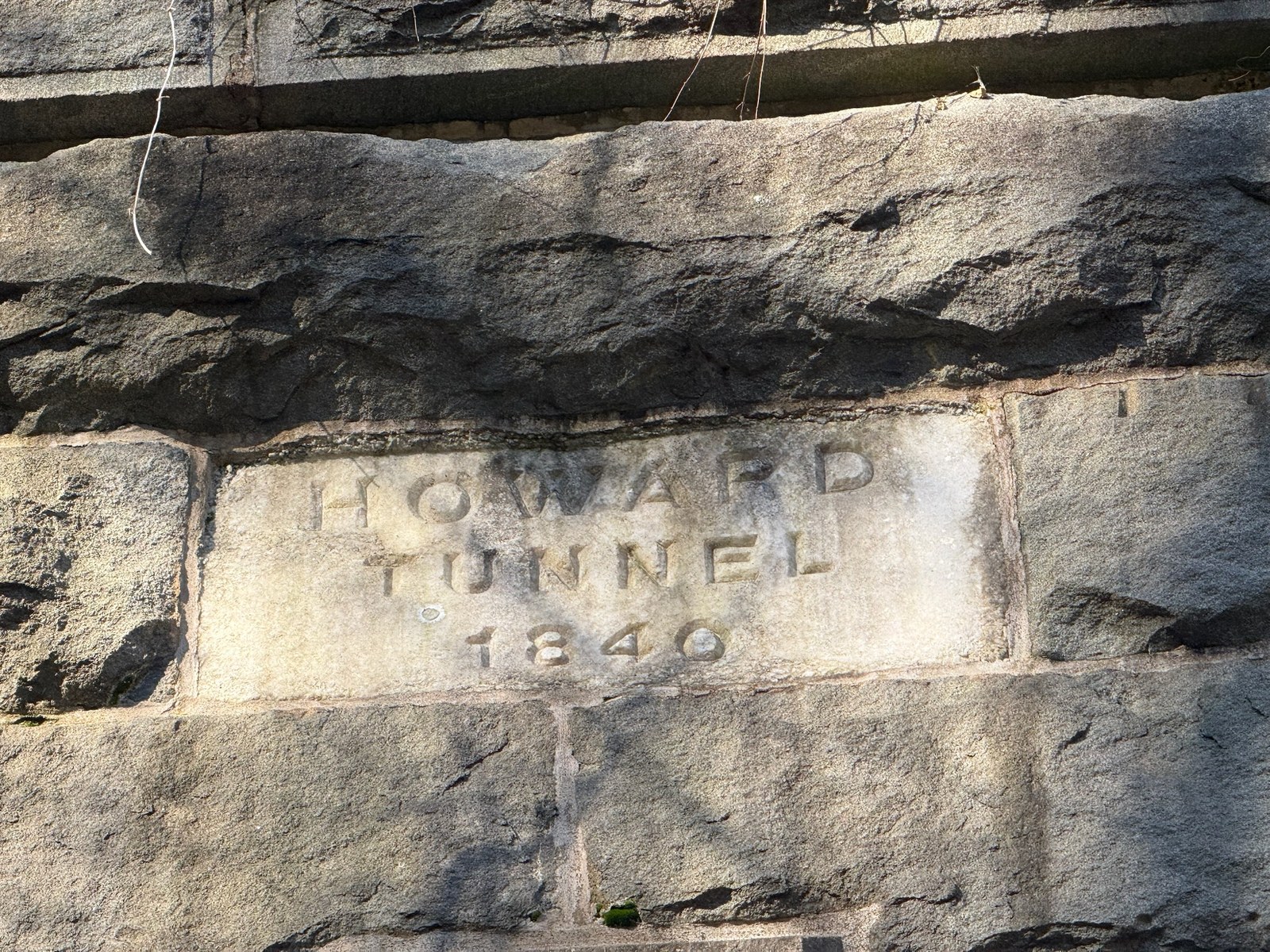
It is still in use … the excursion trains run through it.
You walk the trail right alongside. Stone portal, the cut through the hillside, the sound changing as you get close. Of everything on these 41 miles this is the landmark, and it is the one stretch we would tell you to make the drive for even though it is thirteen miles from New Freedom.
The datestone reads 1840. Above it the lintel is carved Howard Tunnel Rebuilt, with a later year. Built once, rebuilt since, still carrying trains.
Sawyer and Theo led us through here. There is video of it on our homepage.
Not access points, and not worth a drive on their own. Just two things you walk past that are older than almost anything else still standing on the corridor.
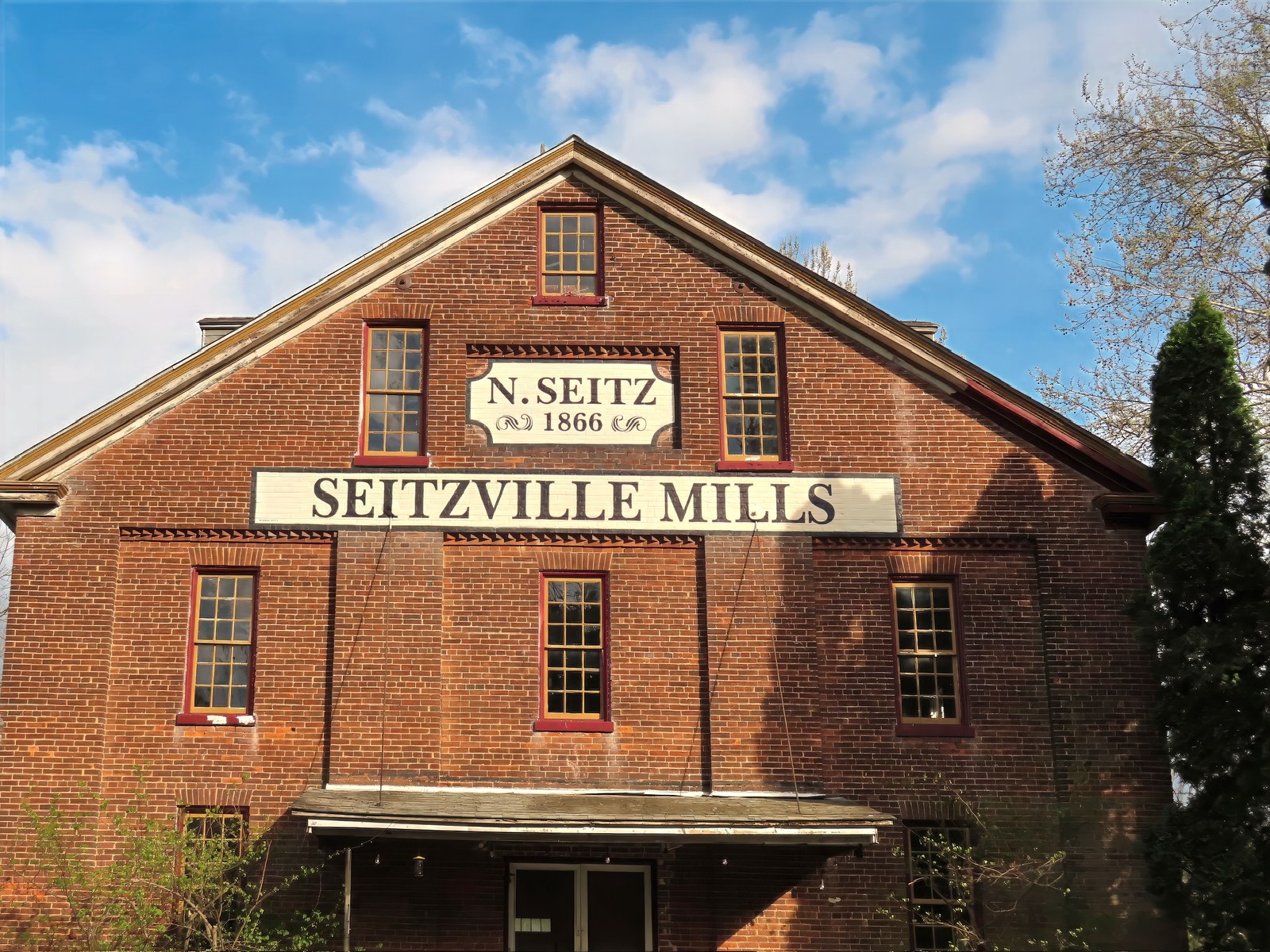
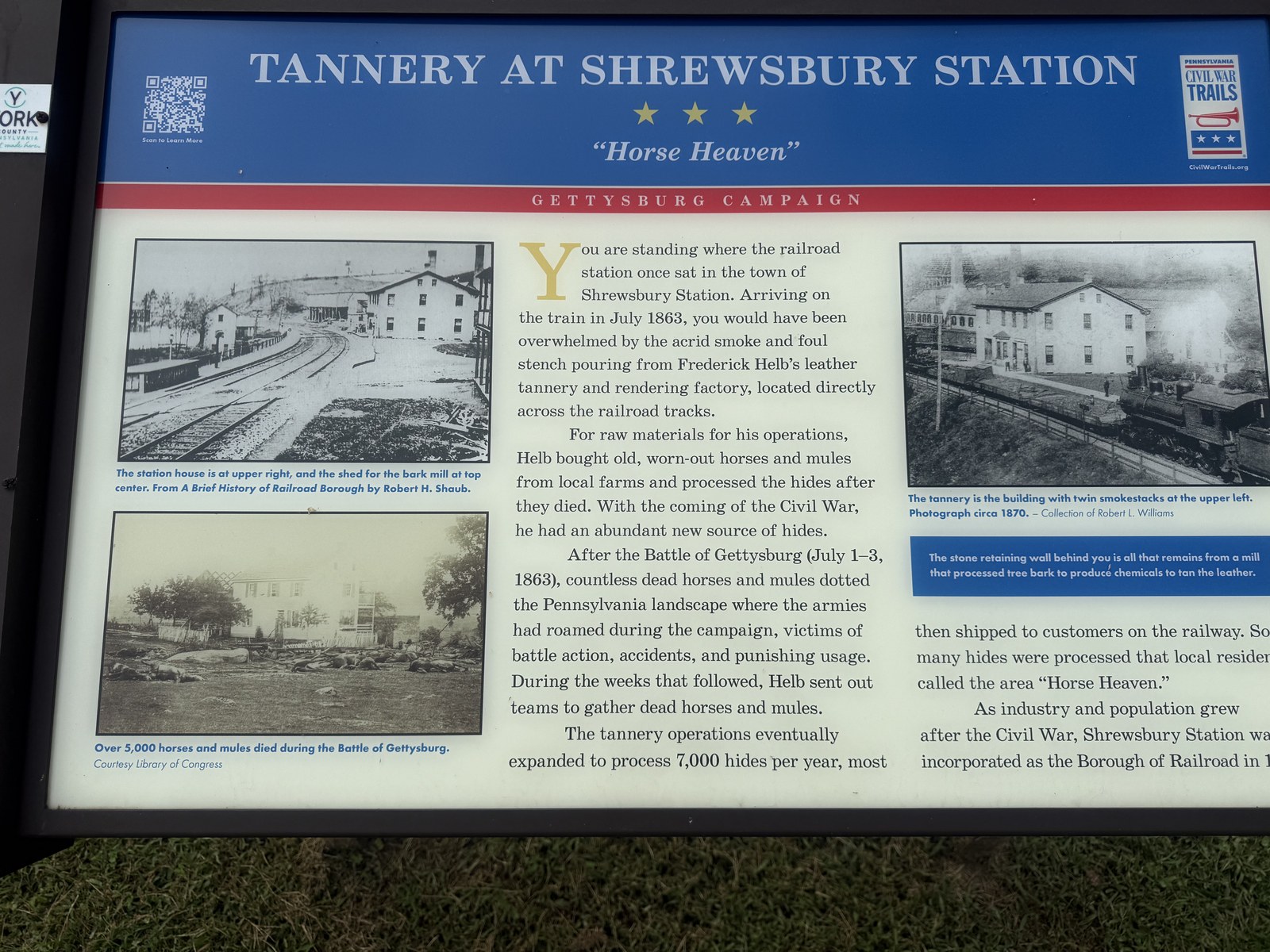
Four stops within two blocks of the trail, plus a brewery three tenths of a mile up the line. This is the part of New Freedom we know best
Here is what makes this town work. Come off the trail at the New Freedom station and you are within a block or two of coffee, ice cream, and two breweries. Park once. Walk to all of it.
That density is not normal for a town of under five thousand people. And the thing that convinced us this place belonged in a dog guide is smaller than that: two of the three breweries keep water out for dogs without anyone having to ask.
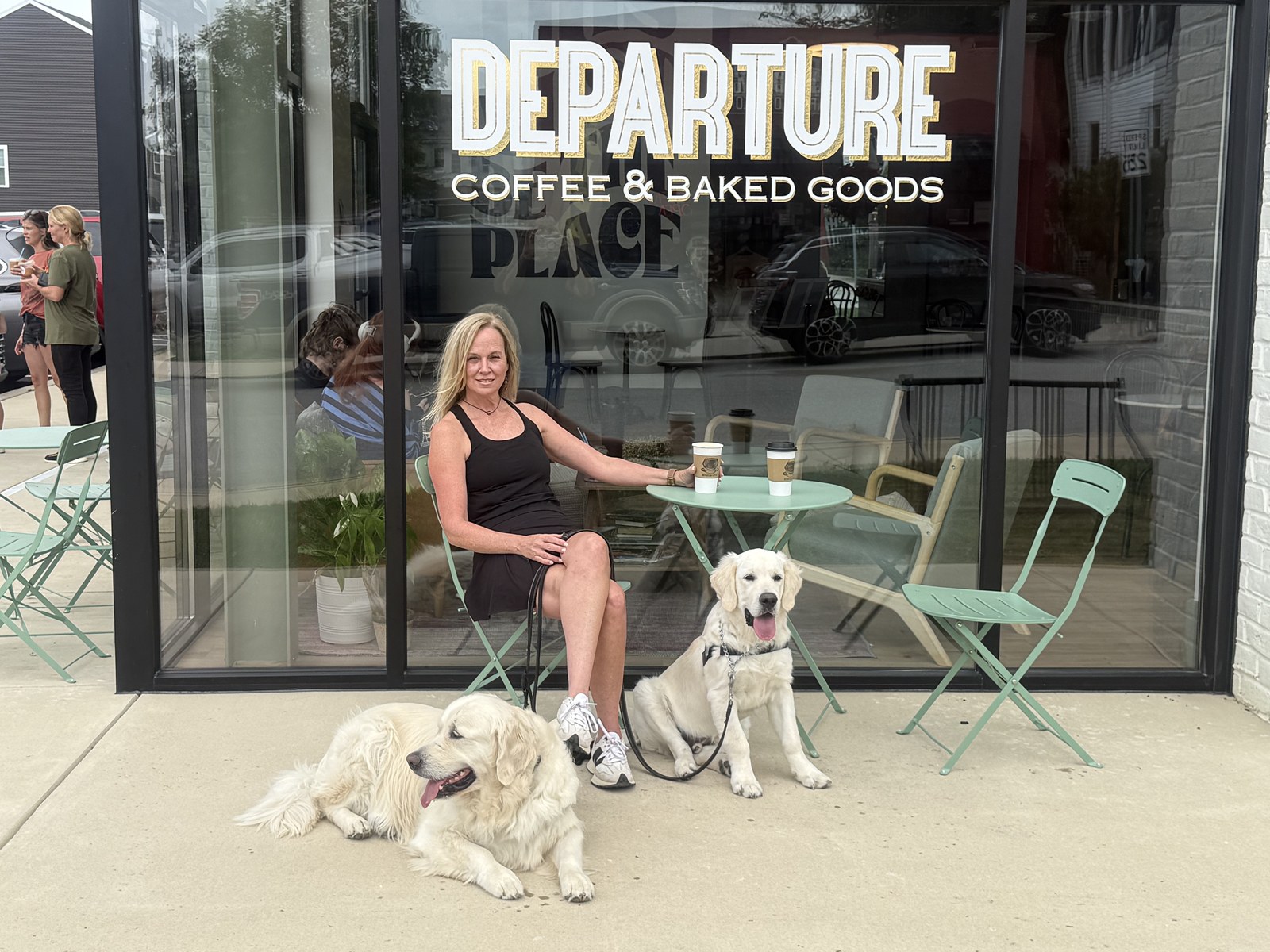
Saturday and Sunday mornings, after a walk on the trail, this is where we land.
The routine never varies. Kelly finds a table outside and stays with the dogs. I go in and order … coffee, and whatever is in the case that morning. Cinnamon rolls, scones, muffins. It is a coffee shop and a bakery in the same room, which in a town this size is doing two jobs at once.
It always takes longer than it should.
By the time I come back out, Kelly is holding court. There is a small crowd around the table, and the questions are always the same. What are their names? What breed? Are they related? Can I say hi? Can I pet them?
Sawyer lived for that part. Theo learned it from him.
It is busy, and not only with walkers … cyclists come off the trail for coffee constantly, which tells you exactly where it sits. Indoor and outdoor seating, clean restroom, half a block from the station. 200 Cambridge Blvd.
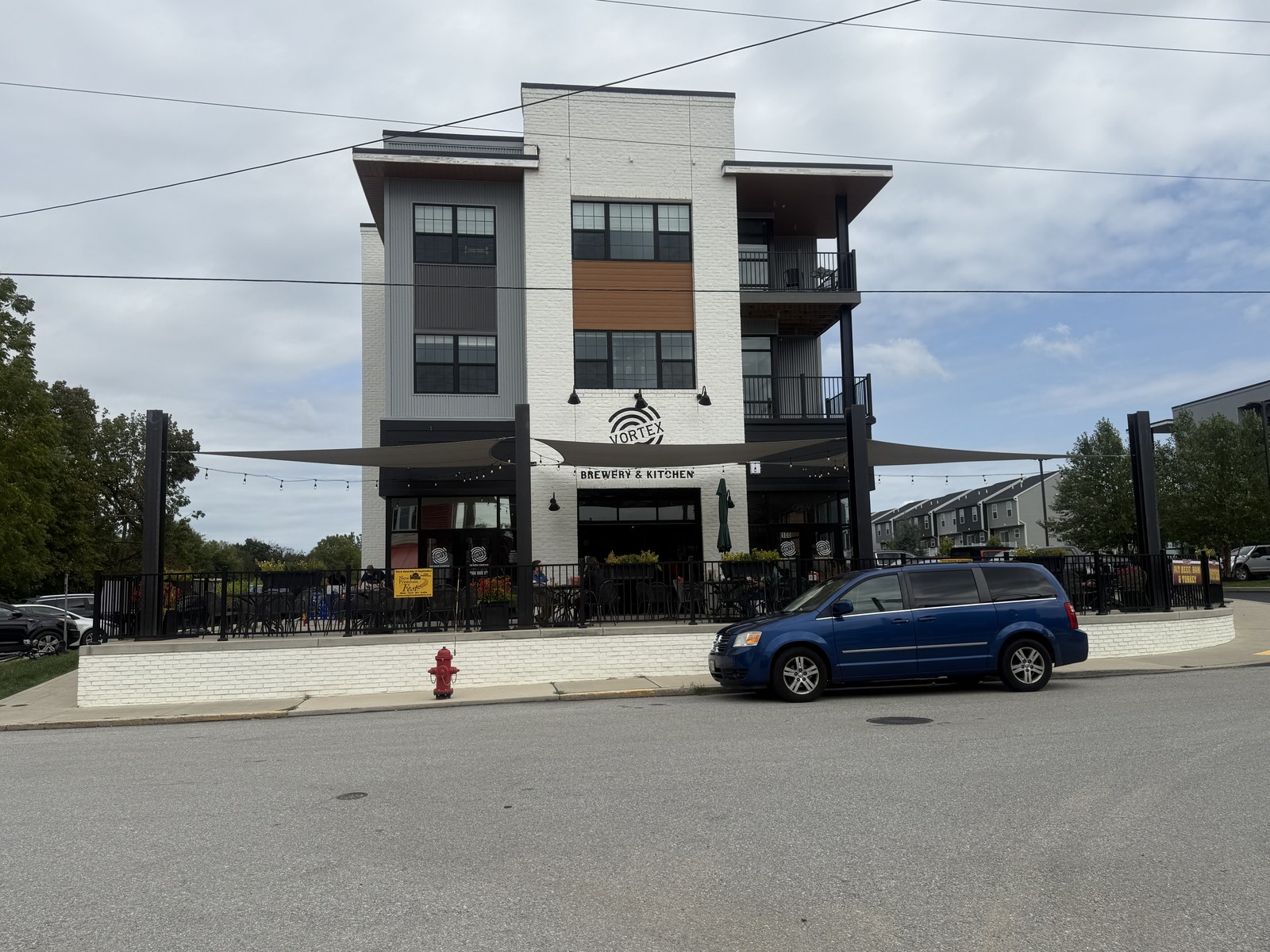
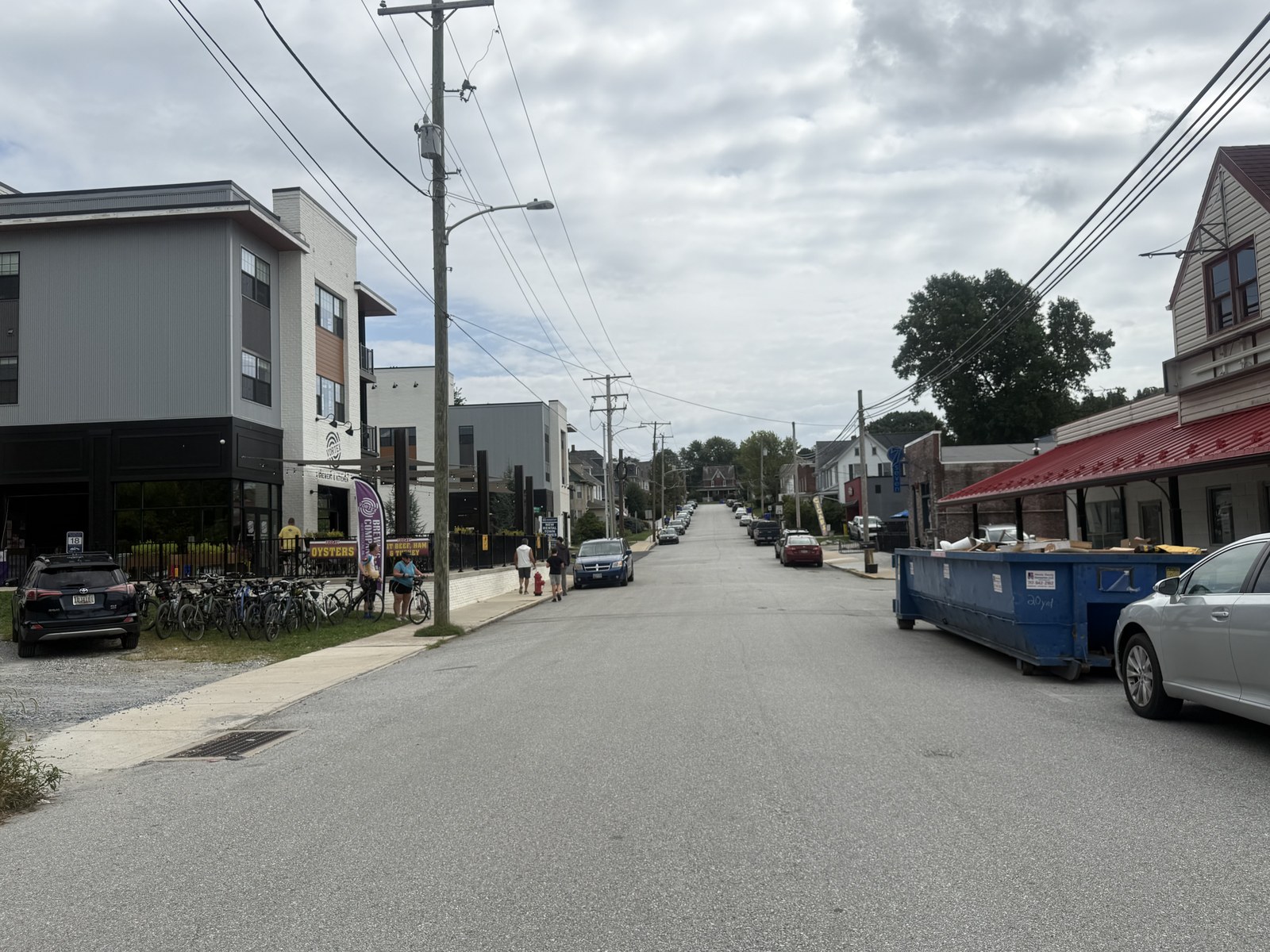
The one that started this guide.
Vortex keeps a water cooler outside, stocked, all season. Nobody asks you to ask. That single detail is why we started paying attention to this town as a dog destination rather than just a place we walk.
Steps from the station and the trail. Outdoor seating, and dogs are part of the normal crowd rather than an exception the staff tolerates. 100 Cambridge Blvd.
The taproom is dedicated to Jake Janiak.
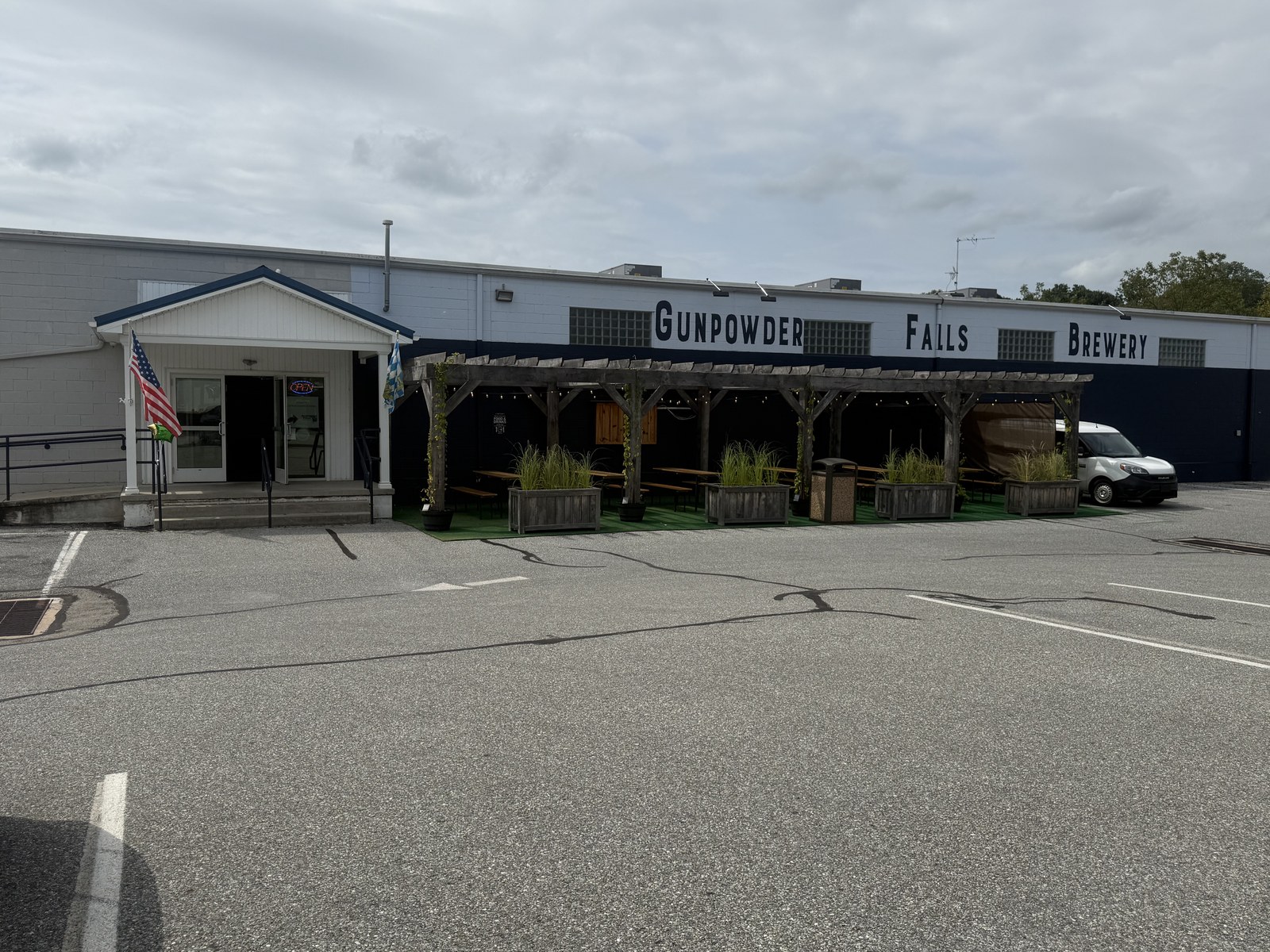
Tucked behind a self-storage building, which is the least promising approach of any brewery we have been to and somehow part of its charm. You have to know it is there.
Second of the two that keeps water out for dogs. German-trained brewmaster, lagers brewed to the 1516 purity law, four ingredients. 224 N Constitution Ave, Suite 5.
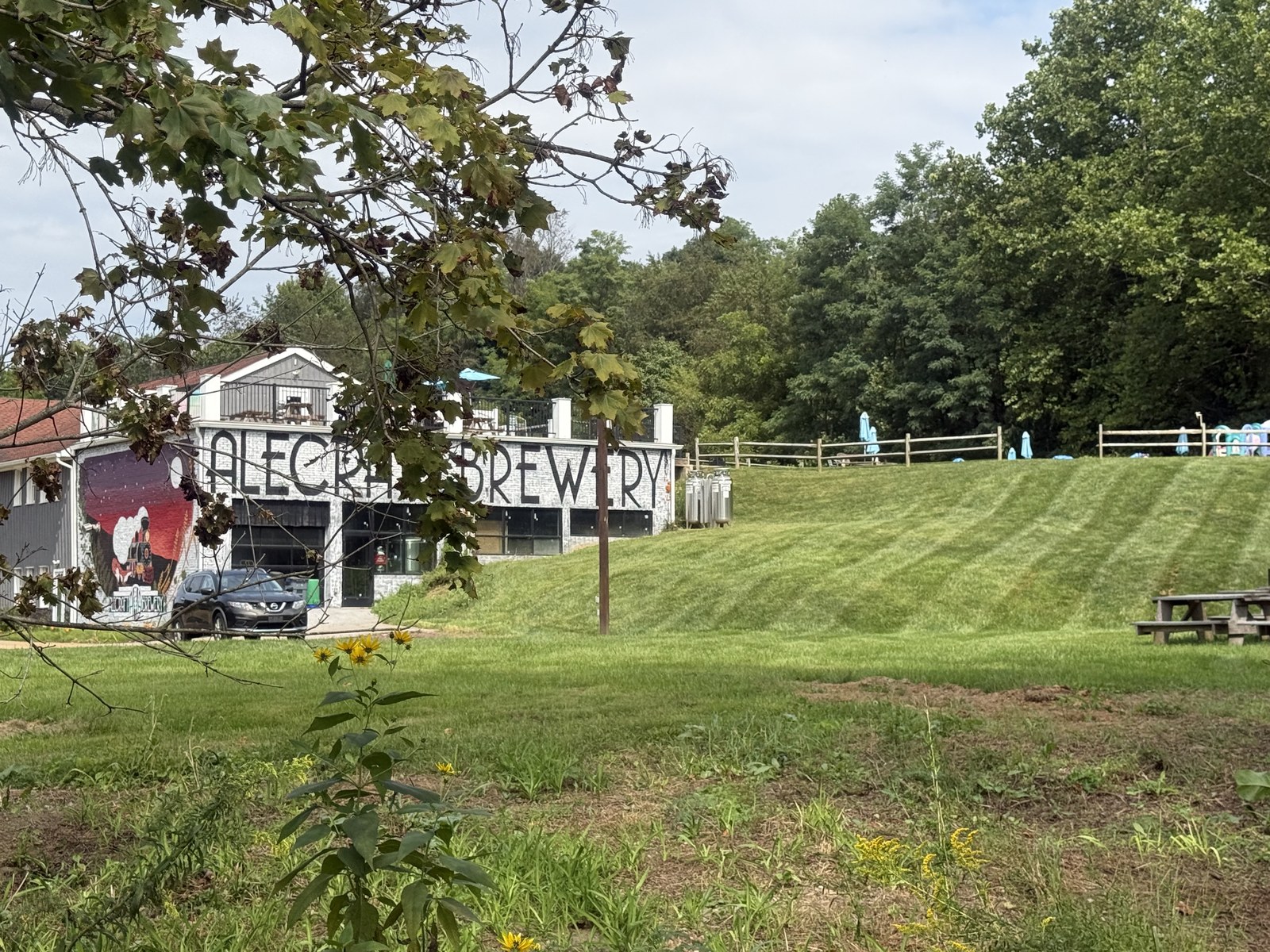
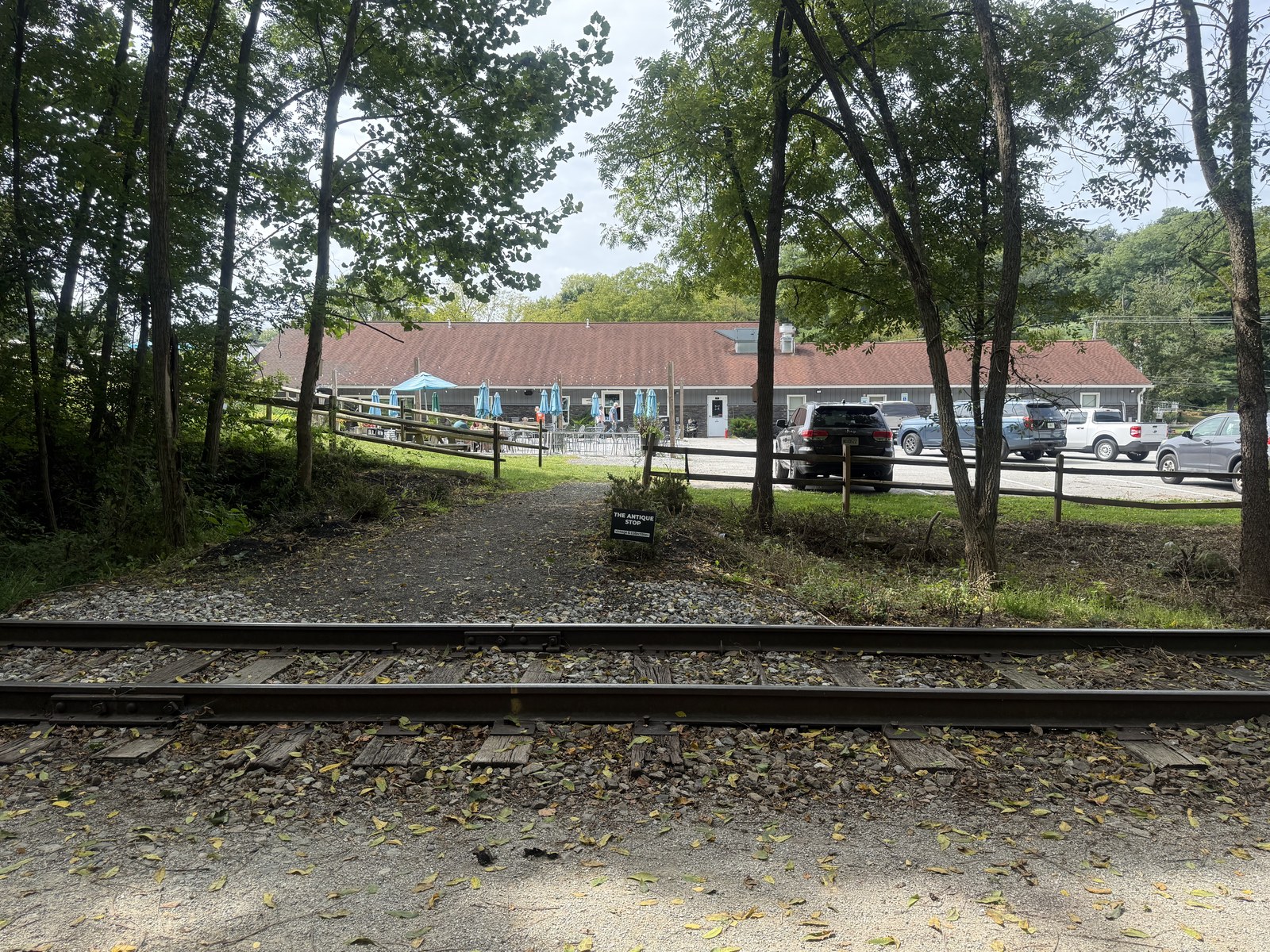
Not part of the New Freedom cluster … this one you reach from the trail. Park at Railroad or Taylor Hill Road, walk south, and it is about three tenths of a mile down. You cross the tracks to get there, which is most of the fun.
We had this one filed as an indoor stop for a long time, and that was wrong. There is a rooftop deck, a mown lawn with picnic tables and umbrellas, and enough outdoor seating that on a decent afternoon there is no reason to go inside at all. With two big dogs that changes everything about the stop.
The sign and the website both call it a brewery and restaurant, so plan on food. One quirk worth knowing: the mailing address reads New Freedom, but the building is in Railroad.
Those tracks are active. The excursion trains run this corridor on weekends, so keep dogs close at the crossing.
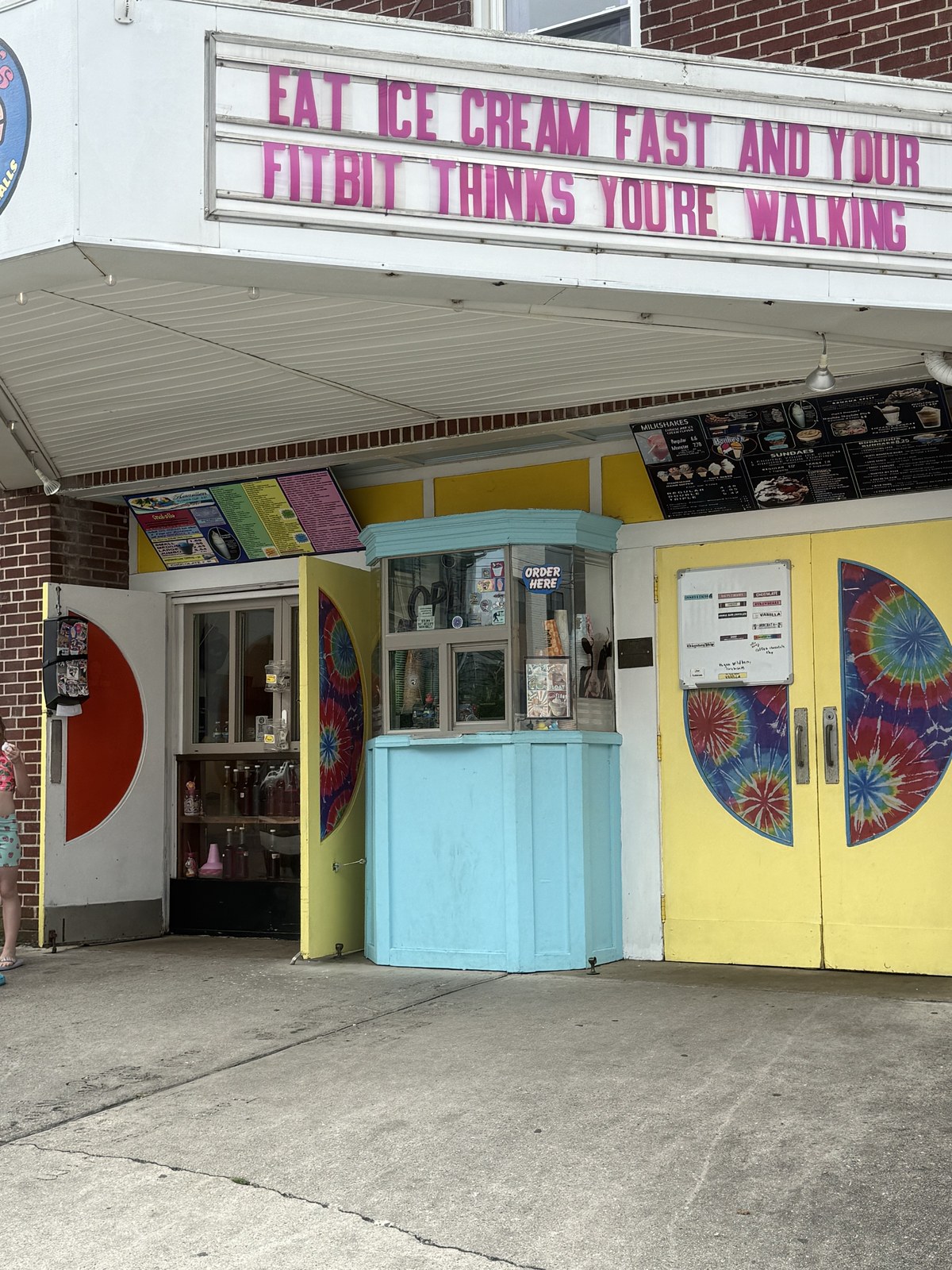
Bonkey's is in the old movie theater, and they kept the original ticket window. You order through it.
No indoor seating at all, which makes it the easiest stop in town with dogs … there is nowhere to go but outside. Walk up, order, sit. 28 E Franklin St.
The marquee out front does its own work. Last time through, it read: eat ice cream fast and your Fitbit thinks you are walking.
Seasonal. An outdoor-only ice cream stand in southern Pennsylvania is not a January destination. Check before you drive out in the cold months.
Every stop above is somewhere we've actually been. Most of them we've been to more times than we could count.
The trail you walk was a rail line first, and part of it still is
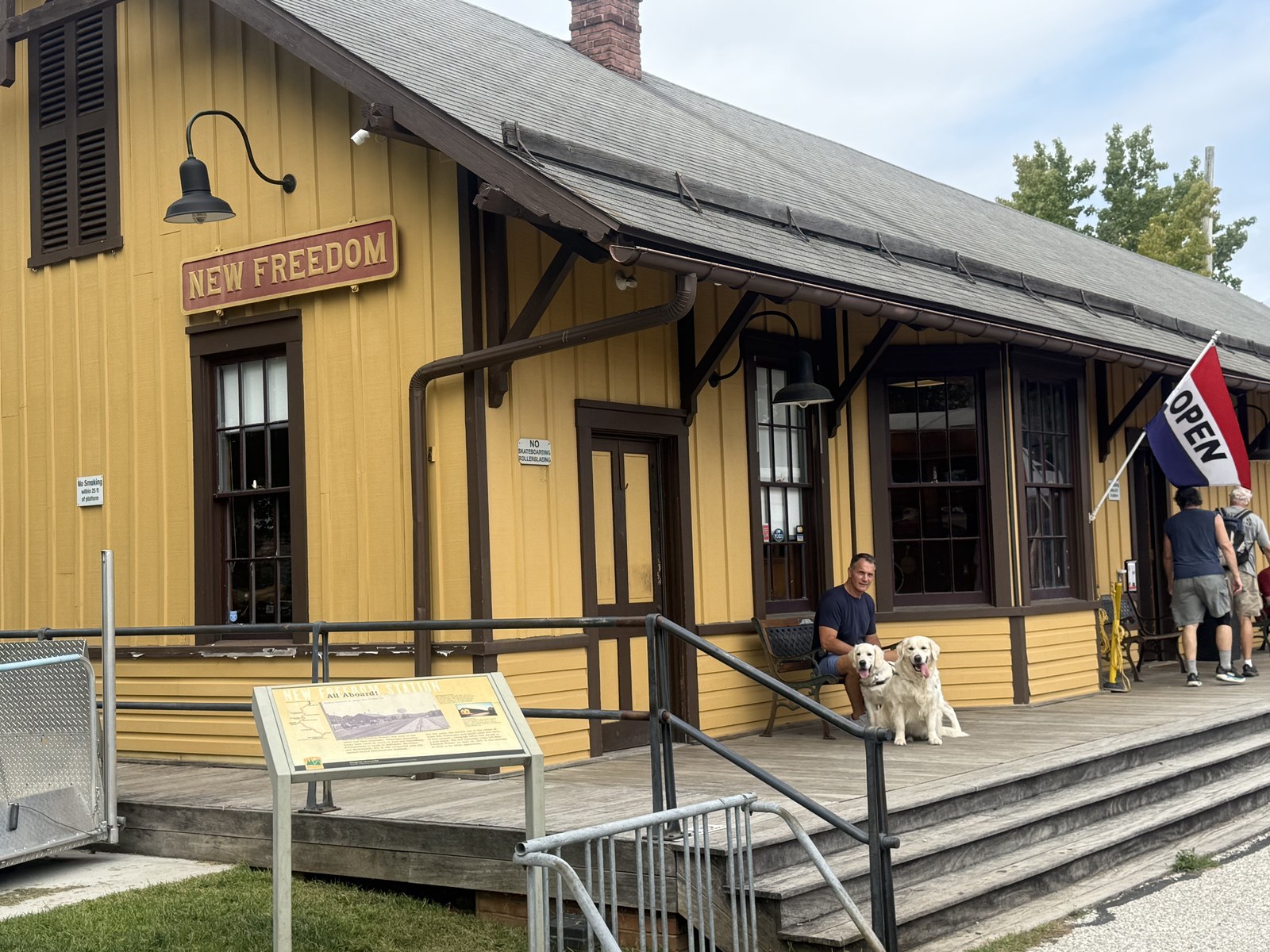
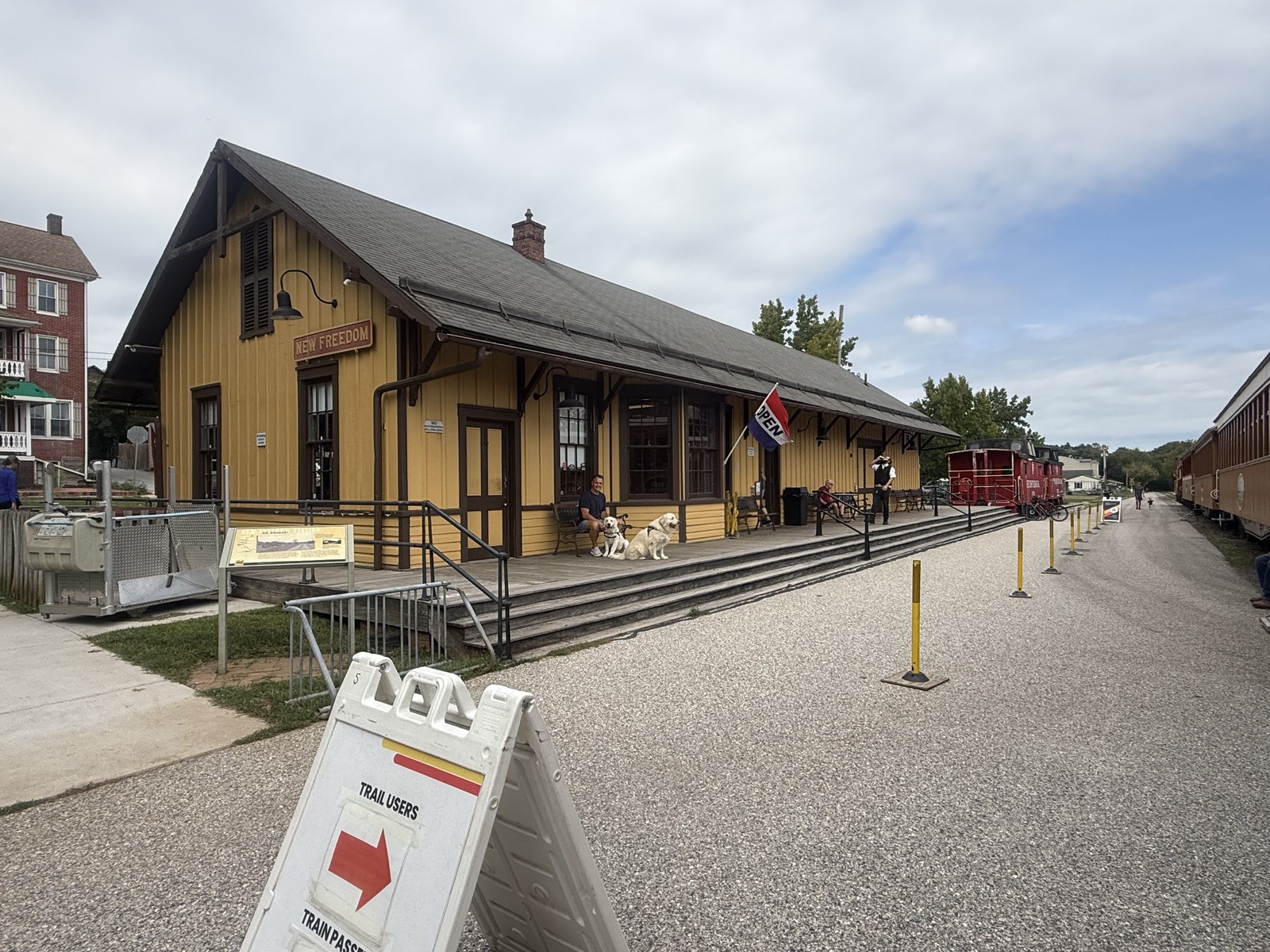
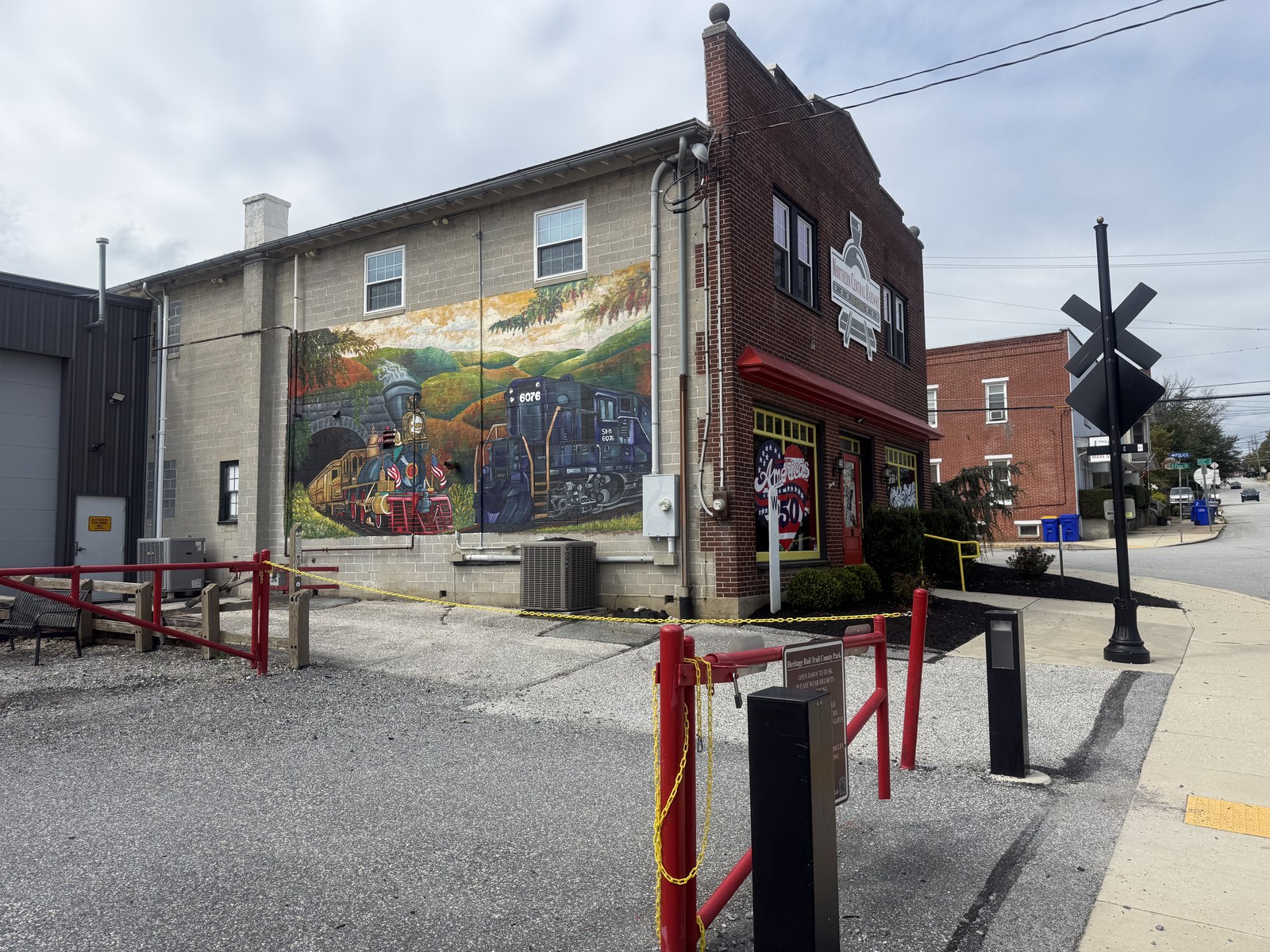
The station at the New Freedom trailhead was built around 1870. It stopped serving trains in 1960 and went on the National Register of Historic Places in 1995. In 2003 it was restored to its 1935 appearance, and a railroad museum inside is open to the public.
The Northern Central Railway of York is a nonprofit Civil War heritage railroad that has run since June 2013, hauling passengers behind a reproduction 1860s steam locomotive over ten miles of original track between New Freedom and Hanover Junction. There is a 1959 diesel as well. Excursions run on weekends.
Three routes. The Glen Rock Express is about an hour round trip. Hanover Junction runs two and a half hours with a layover long enough to walk through the museum there. Howard Tunnel is the long one at three and a half hours.
The history is not decoration. Lincoln rode these tracks north from Baltimore and changed railroads at Hanover Junction on November 18, 1863, on his way to Gettysburg. That depot is still standing, ten miles up the line from here.
Themed rides run throughout the year … Santa, princess excursions, wine and cheese, happy hour. They also run a Bike Aboard service and a brunch express down to AleCraft.
One navigation note, because both addresses turn up online and both are correct: the station is 117 N Front Street and the engine house is 2 W Main Street. They are different buildings.
We've stood at this station hundreds of times. We've never ridden the train, and we've never taken the dogs inside the museum. Everything above about the excursions and the museum comes from the railway's own materials and from riders who've written about it. When we ride it, we'll tell you what it was actually like.
Three properties that take dogs, ranked by how close they put you to the trail
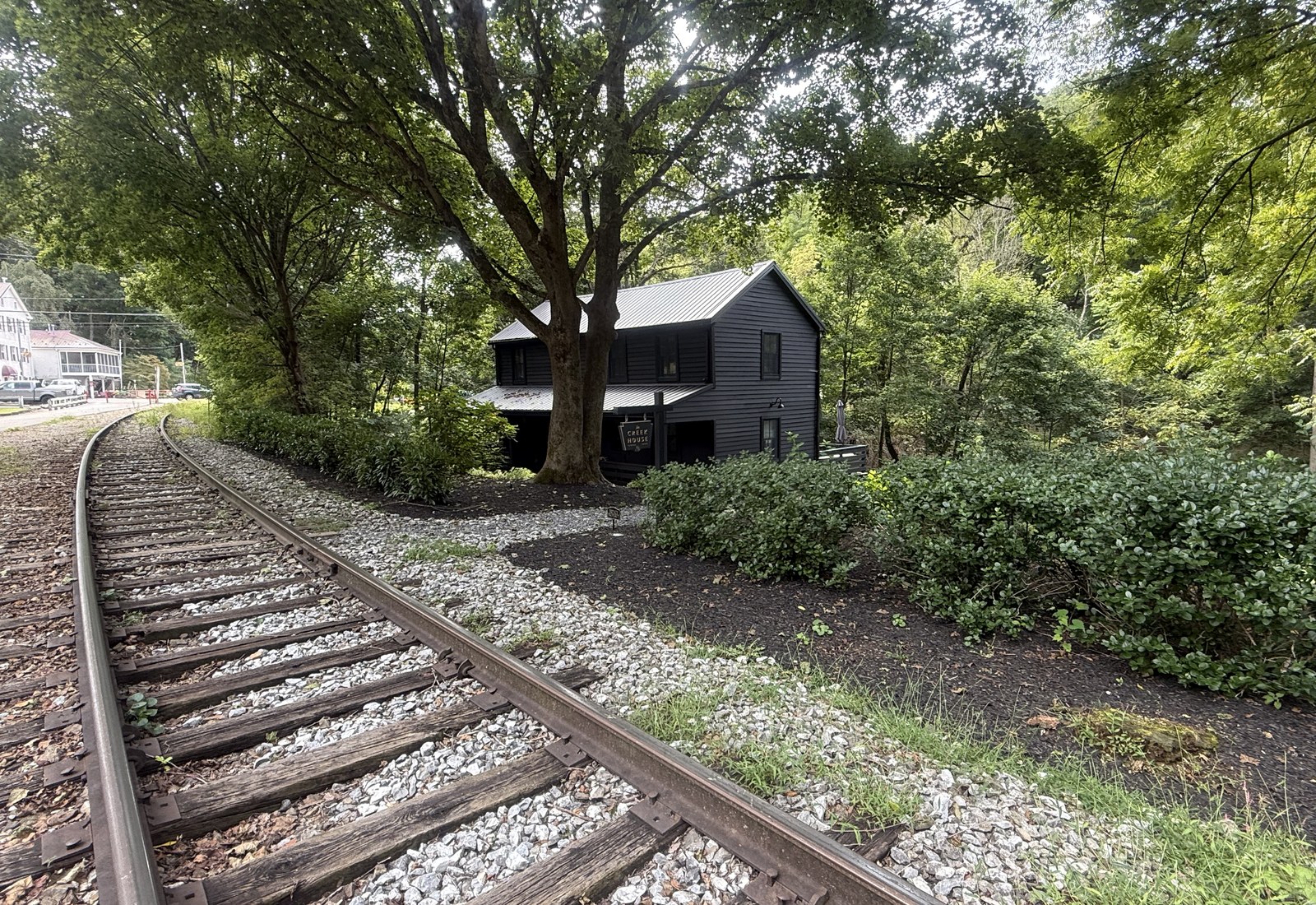
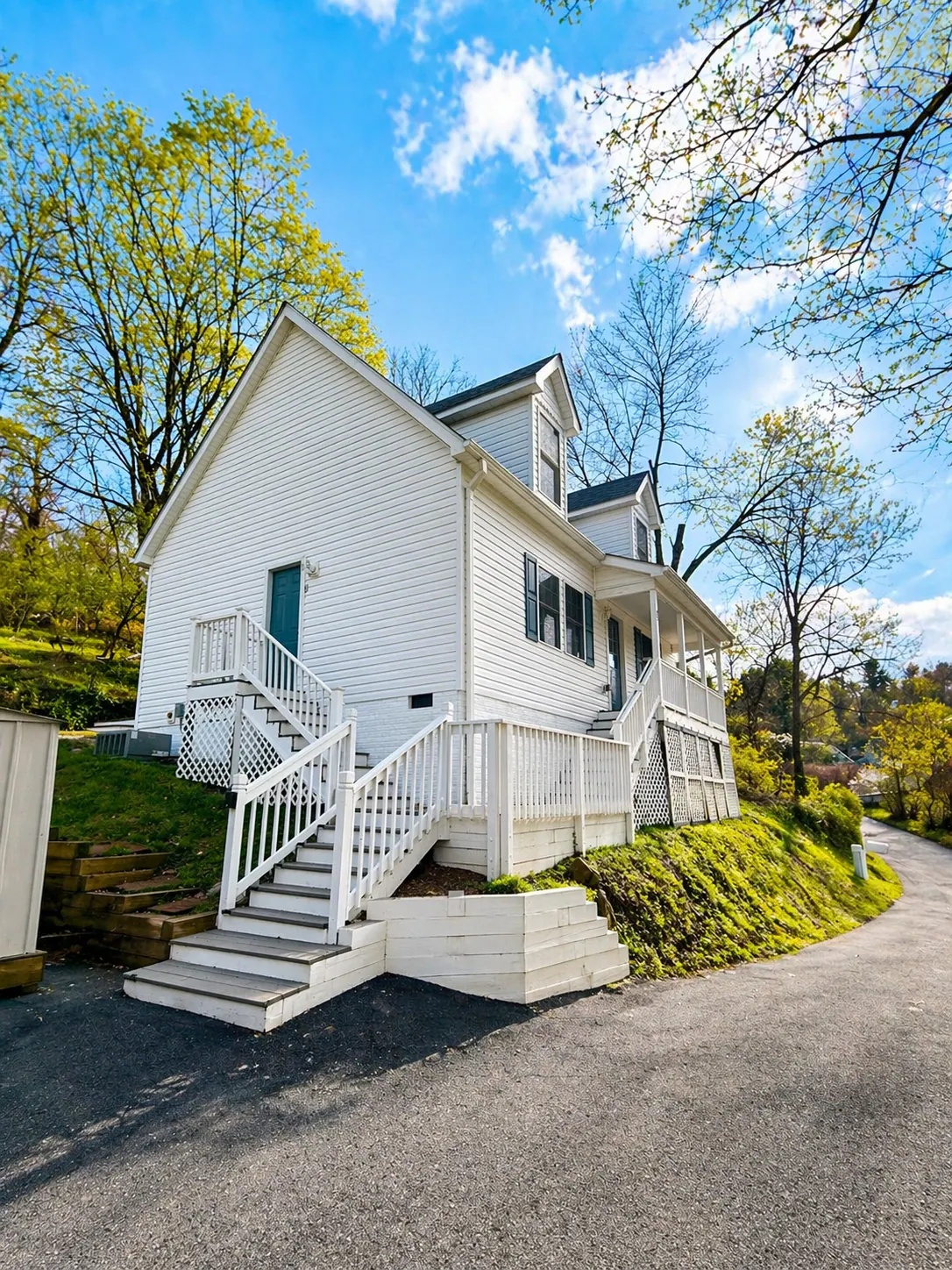
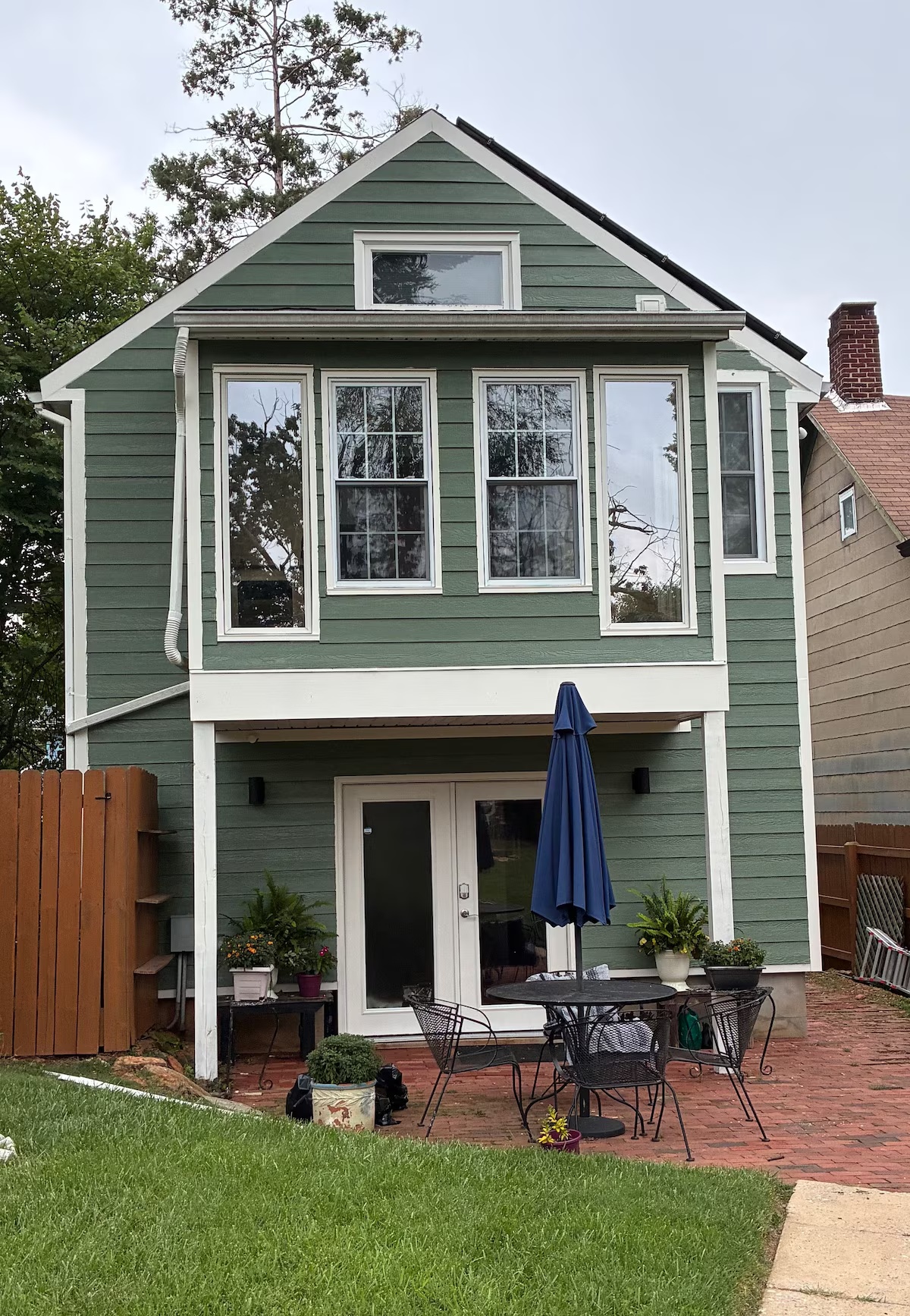
We live twenty minutes from here, so we have never stayed in any of these. We picked them the same way we would if we were booking: dogs allowed, outdoor space, and as close to the trail as we could get. Everything above comes from the listings and their reviews, not from a night we spent there. One piece of practical advice from our own booking experience … message the host before you book. With two large dogs the real answer usually comes out of a conversation rather than a filter.
The argument for this town is geographic. Zoom in and you can see it
Tap to load · requires internet connection
What to know before you go